




Showing posts sorted by date for query International Year of Astronomy 2009. Sort by relevance Show all posts

Thursday, August 23, 2012

Laurel Kornfeld has a legitimate request regarding astronomical nomenclature


Laurel has for a long time been an advocate for Pluto and in general questioned substantiation of some of the basic definitions adopted and promoted by the IAU [International Astronomical Union]. Here is her current letter to the IAU.

August 22, 2012

Dear Dr. Williams, Members of the IAU Executive Committee, Members of the

Secretariat, Members of the Working Group on Planetary System Nomenclature, Members of the Working Group on Small Bodies Nomenclature, and Delegates to the 28th IAU General Assembly,

For the second time, I am writing to respectfully request the General Assembly officially reopen the planet definition issue in order to address ongoing questions and controversy that resulted from the 2006 planet definition vote as well as to incorporate new data on objects in our own solar system and on exoplanets into a more broad, inclusive, and comprehensive understanding that streamlines the spectrum of sub-stellar bodies ranging from tiny asteroids and comets to the largest sub-brown dwarfs in this and in all stellar systems in the universe.

As I did in 2009, I ask specifically that you reconsider and add Resolution 5b from 2006, which would establish “planets” as a broad, umbrella category under which both classical and dwarf planets would be included; that the definition be expanded to include objects that orbit a star or are free-floating, to accommodate exoplanets and rogue planets; and that electronic voting be enabled to allow IAU members who are unable to physically attend General Assemblies to vote remotely.

In the six years since the 2006 vote, there have been significant discoveries in both our solar system and others that call into question the utility of the planet definition then adopted. Many exoplanets since discovered would not fit the planet definition adopted then even if it were expanded to include objects other than those that orbit the Sun. Astronomers have discovered exoplanet systems in which two planets share the same orbit; systems with two giant planets in 3:2 resonances; systems with as many as six planets all orbiting within a distance from their star comparable to Mercury’s orbit; planets that orbit their stars backward; and planets that formed directly from stellar nebulae the way stars do. Many exoplanets discovered have extremely elliptical, even comet-like, orbits.

In our solar system, the Dawn mission has revealed Vesta, which is not quite in hydrostatic equilibrium, to be far more like a terrestrial planet than like an asteroid. Vesta turns out to be a complex, geologically layered body with an iron core that formed in a process similar to the way terrestrial planets like Earth did. Dawn’s revelations have led some astronomers to question whether Vesta should be considered the solar system’s “smallest terrestrial planet. Vesta is not a simple ball of rock. This is a world with a rich geochemical history. It has quite a story to tell,” according to Dawn Principal Investigator Dr. Chris Russell.

As members of the IAU are well aware, Dawn is now departing Vesta and heading for Ceres, which it will study in similar detail.

The initial reason that prompted the 2006 General Assembly to determine a need for defining the term “planet” was the discovery of Eris, which was at the time believed to be larger than Pluto. However, in November 2010, when Eris occulted a star, a team of astronomers led by Dr. Bruno Sicardy determined that Eris is smaller than previously believed, marginally smaller than Pluto though about 27 percent more massive. This is significant because it calls into question the initial “need” for a definition since this “need” was based on erroneous information.

I am troubled by what appears to be an inflexible stand by the IAU, a determination to never reopen the planet definition discussion at any General Assembly, even into the indefinite future. This makes absolutely no sense. The 2006 discussion was based on new data discovered about Eris and the Kuiper Belt. Now, in 2012, we once again have more new data on bodies in this and other solar systems. Three years from now, we will have even more data on small planetary bodies via the Dawn mission to Ceres and the New Horizons mission to Pluto.

How can the IAU justify not reopening this discussion in light of all this new data? If this year’s General Assembly is determined to not take up the discussion, why not commit to putting it on the agenda for 2015? That would be an ideal time to take up the planet question again, as there will likely be a host of new information from the Dawn and New Horizons missions on two of the objects directly at the center of this debate.

As I did in 2009, I emphasize that this request is not about Pluto; it is about the need for a more useful, clear definition that encompasses both orbital dynamics and planetary geophysics, one that covers both our solar system and others.

The IAU considers communicating astronomy with the public as one of its essential tasks. I remind the organization that communication is a two-way street. Members of the public, astronomy enthusiasts, and amateur astronomers have consistently communicated dissatisfaction with the 2006 planet definition resolution. Isn’t it time the IAU hear them and respectfully respond to their concerns instead of ignoring and disenfranchising them?

Planetary science is constantly evolving with new discoveries, and in light of this, it makes sense that definitions will need to be updated and refined continuously. The 2006 vote was a first attempt at a definition, but it should not be considered a final one. This is not religion, where an authoritative body speaks once for all eternity, issuing a decree that can never be changed. By reopening the planet definition discussion, the IAU will affirm its relevance and flexibility through willingness to constantly reconsider previous decisions when new data call those decisions into question.

However, if the IAU continues to dig in its heals and refuse to even consider a new discussion on planet definition, the organization risks being viewed as emotional, bureaucratic, and dogmatic, and will become increasingly irrelevant as an authoritative body on the science of astronomy. At that point, other groups and individuals will very likely fill the void and take up the issue on their own, to the point that the matter may fall completely outside the influence of the IAU.

In order to further respectful two-way communication with the public, I urge the IAU to actively seek input on important issues such as this one from a broader population, including professional astronomers who are not IAU members, amateur astronomers and groups representing them, and astronomy students at all levels.

Regardless of the fact that no action on the planet classification issue has been planned for this General Assembly, I implore the IAU’s leadership, delegates to the GA, and members to do what needs to be done, to show courage and sensitivity to both scientists and lay people by admitting the planet definition issue remains unresolved and by adding a provision to this year’s GA reopening the planet definition discussion, or at least committing to putting it on the agenda of the 29th GA in 2015.

More specifically, I also ask that the Resolutions Committee place a resolution on the General Assembly floor for a vote on August 31, 2012, to officially reconsider resolution 5b of 2006, which if passed would establish dwarf planets as a subclass of planets. I also ask that a second resolution be put to the GA floor to include exoplanets in all further planet definition discussions. Finally, I ask that a resolution allowing for electronic voting be adopted before any other resolutions are considered to allow the IAU’s full membership to vote on all relevant issues, a provision badly needed in these difficult economic times when so many cannot afford the expense of travel and lodging to attend the GA in person.

Sincerely,

Laurel E. Kornfeld

Highland Park, NJ, USA

Writer, amateur astronomer, astronomy student and blogger

http://laurelsplutoblog.blogspot.com

http://laurele.livejournal.com

Monday, January 16, 2012

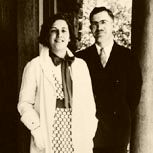
Deceased--Patricia "Patsy" Edson Tombaugh

Patricia "Patsy" Edson Tombaugh
November 7th, 1912 to January 12th, 2012

"Community leader, wife of astronomer, Tombaugh dies at 99"

by

S. Derrickson Moore

January 13th, 2912

Alamogordo Daily News

Patricia "Patsy" Edson Tombaugh, community leader, educator, artist, and enthusiastic supporter of her astronomy pioneer husband Clyde, discover of the planet Pluto, died Thursday at the Arbors of Del Rey in Las Cruces. She was 99.

"Mother was born Nov. 7, 1912, and hoped to enjoy celebrating her 100th birthday with New Mexico's Centennial this year, but her body just gave out," said her daughter Annette Tombaugh Sitze of Las Cruces.

She was in Florida for the 2006 launch of the New Horizons Pluto Probe, which carried Clyde's ashes, and expressed hopes to live to see it reach Pluto in 2015.

She met Clyde Tombaugh shortly after his 1930 discovery of Pluto, when he entered Kansas University as a freshman in 1932, and stayed at her mother's rooming house. They were married in 1934 and had two children, Annette and Alden, both Las Cruces residents.

Known for her sense of humor, she once joked that "Pluto was his first love" and she had to compete with several planets, comets and assorted other heavenly bodies to attract his attention.

But it was clear, through their six-decade marriage that she was the love of his life, and it was her connections that steered the course of his life after his early astronomical coup.

"My uncle, James Edson, my mother's brother, introduced them and it was my uncle, who also brought Werner von Braun here, who was responsible for bringing them to Las Cruces in 1946," Sitze said.

As Chief of Optical Measurements Section at White Sands Proving Ground, Tombaugh was responsible for the tracking telescopes used to photograph rockets and missiles during test flights, and his wife quickly established herself as a community leader here.

She was a founder of the Unitarian Universalist Church of Las Cruces, one of the area's first art associations, and the Community Concerts Association and was active in the University Women's Association, the Women's Improvement Association and the Tombaugh Scholars Program Foundation at NMSU.

She also taught for many years at regional schools, including Old South Ward, Valley View and Connelly elementary schools.

"I think she'll be remembered as a vibrant person very interested in the arts and education. We were very fortunate to have had them as our parents. We could always believe in the truth of what they said. They developed a home that was reliable and cozy," said her son Alden Tombaugh.

She worked closely with Clyde on lecture tours throughout the world until his death in 1997 in their Mesilla Park home. She was a frequent guest at some regional institutions that bear the family name, including Clyde Tombaugh Elementary School, NMSU's Clyde W. Tombaugh Campus Observatory and Tombaugh IMAX Dome Theatre at the New Mexico Museum of Space History in Alamogordo.

She attracted new friends and fans after her 2010 appearance on "The Pluto Files" on PBS's NOVA series, focusing on the conflict over the 2006, still-controversial meeting of the International Astronomical Union, when a vote involving 424 astronomers defined the term "planet" for the first time, a definition which excluded Pluto and added it as a member of the new "dwarf planet" category.

The NOVA crew came to Las Cruces 2009 to film locations that included Alden Tombaugh's home and the Tombaugh Art Gallery, which houses a stained glass window depicting Clyde's life, at the Unitarian Universalist Church, which the Tombaughs helped found in 1954.

"She spoke lucidly and articulately about their life together. This was a treasure of storytelling. That has got to be the friendliest family I have ever spent time with in my life. I learned how friendly people can be, even in times of intellectual conflict," said NOVA host Neil Tyson. Tyson had been one of the ringleaders in the effort to demote Pluto, but changed his mind after meeting Patricia and her family.

In addition to her son and daughter, she leaves five grandchildren, nine great-granchildren and one great-great grandchild.

"New Horizons Team Remembers Patsy Tombaugh"

January 16th, 2012

It was January 2006, just days before the New Horizons spacecraft lifted off from Cape Canaveral Air Force Station, Florida. A reporter asked Patsy Tombaugh, widow of Pluto’s discoverer, Clyde Tombaugh, what her husband might have thought about the first mission to the planet he found in 1930.

“He’d be very happy about it,” she said, “because he’d really want to know what they were finding out about Pluto.”

Today, the team fulfilling that wish mourns Patsy Tombaugh, who died Jan. 12 in Las Cruces, N.M. She was 99.

"I will never forget Patsy's enthusiasm in New Horizons and her pride in what we're doing,” said Alan Stern, New Horizons principal investigator, from the Southwest Research Institute. "I'll also never forget her smile and winning way. On behalf of the entire New Horizons team, I want to express our condolences to Patsy's family and friends, and to say that when we explore Pluto in three years, she will be as much on our minds and in our hearts, as she is today."

Patricia “Patsy” Edson met Clyde Tombaugh in the spring of 1933; her older brother James and Clyde were astronomy majors at the University of Kansas, and good friends. They married in June 1934; daughter Annette was born in 1940 and son Alden in 1945. But, as Patsy wrote in a 2005 New Horizons web story, their “family” seemed much larger.

“Living with Clyde Tombaugh was like having the celestial universe in the next room, but I found it a very good neighbor,” she wrote.

“Of course, I always had to share Clyde not only with Mars, Jupiter, the Moon, and stars, but also with the public. As the Space Age grew so did Clyde's fan mail. From all over this world came letters from all age groups asking for information or autographs. He once said that he had received at least 30,000 letters. He tried to answer each one.”

Clyde died in 1997. In addition to her son and daughter, Patsy is survived by five grandchildren, nine great-grandchildren and one great-great-grandchild. A memorial service is planned for Feb. 12 in Las Cruces.

"My Life with Clyde Tombaugh"

by

Patricia E. Tombaugh

October 31st, 2005

Living with Clyde Tombaugh was like having the celestial universe in the next room, but I found it a very good neighbor. Mars and the Moon were his favorite telescopic studies. At the age of 12 Clyde found astronomy through his love of geography. What would be the geography of other planets?

When Clyde Tombaugh discovered Pluto in February 1930, I was in high school at Westport High in Kansas City, Missouri. I graduated in 1931, and about a year later my widowed mother moved us to Lawrence, Kansas. There, her three children were to work their way through their father's (J.O. Edson's) alma mater, the University of Kansas.

I met Clyde in the spring of 1933. He and my older brother, James B. Edson, were astronomy majors and good friends at KU. James brought Clyde to rent a room at our house for the next school year. Clyde returned to Lowell Observatory for the summer, and we exchanged letters during that time.

In the fall of 1933, Clyde (who had a scholarship) returned to Lawrence to be a student roomer at our house. During that year the Syzygy Club formed. The club's six or seven members met at our house. We talked of rockets and space travel, space platforms and astronauts. We never spoke to the outsiders about this. They thought we were really and completely crazy. I had painted tennis balls to look like Mars and Jupiter. Clyde thought any girl who was that into astronomy was pretty cool. We were married June 7, 1934, with a small event at my mother's home. I had finished my freshman year and Clyde his sophomore year. I was 21, and he was 28.

We spent summers in Flagstaff, Arizona, at Lowell Observatory as we worked our way through college. Clyde was still on the project searching for a 10th planet. We lived in a small, brown, shingled cottage on the observatory grounds among the pine trees 300 feet above the town. We cooked and heated with wood fires and had no refrigerator, telephone, or washing machine. It was a new experience for this city girl, but I loved this beautiful and interesting place, meeting very special people, and getting acquainted with the ways of various Native American tribes there. Flagstaff's population then was about 4,000 people.

Clyde finished his first degree in 1936. We then went to live and work at the observatory full-time. After saving up for two years we returned to KU. Clyde received his master's degree in astronomy, and I finished my degree in philosophy in 1939. We returned to Flagstaff and to parenthood: daughter, Annette, was born in 1940 and son, Alden, in 1945. In 1942, we bought a house in Flagstaff and moved off of Mars Hill into town.

During World War II Clyde had been called to teach navigation to new Navy pilots at the Northern Arizona College. He was also Commander of Civil Defense for Coconino County, Arizona. At the end of WW II many changes occurred rapidly. In 1945, Clyde was a visiting professor at UCLA. In 1946, he left Lowell Observatory. We moved to Las Cruces, New Mexico, where he was Chief of the Optical Measurements section at White Sands Proving Grounds (WSPG). There the American Space Age was in its birth pangs. We watched the delivery with great joy and excitement! The children grew, and I worked on the New Mexico State University campus at the Physical Science Laboratory reading rocket film and plotting flight trajectories.

After nine years with rockets, Clyde wanted to get back into astronomy. He proposed and received a grant to search for small natural satellites of the Earth. He left WSPG (now WSMR, for White Sands Missile Range), moving this project to the Physical Science Laboratory on the NMSU. campus. Clyde later established a Planetary Research Center there, which was supported by grant money. These efforts led to the creation of a Department of Astronomy for a doctoral degree program at NMSU, and also a leading observatory called Apache Point. Apache Point is financed and used by a consortium of universities and the Sloan Digital Project exploring the outer edge of the universe.

Of course, I always had to share Clyde not only with Mars, Jupiter, the Moon, and stars, but also with the public. As the Space Age grew so did Clyde's fan mail. From all over this world came letters from all age groups asking for information or autographs. He once said that he had received at least 30,000 letters. He tried to answer each one.

Clyde had minored in geology to apply that knowledge to the study of Mars and the Moon. He later taught geology at NMSU. He collected rocks everywhere. He carried an Earth globe in his head and loved maps and glass - colored or clear. He had a weather station of his own and made a graph of rainfall in Las Cruces over the years showing drought periods. He was a master at creating telescope mirrors and always had one in process.

Clyde loved animals. He said he spent more time with horses on the farm than with his family. He knew the game of football. He was once asked to call a play at an NMSU game - that call resulted in a field run and a touchdown. They gave him an "honorary coach" plaque.

The press, media, civic clubs, and schools gained from Clyde's willingness to share his passion for the study of the heavens. He was an excellent teacher. A beautiful Las Cruces elementary school carries his name. Being a Depression child on a farm, he kept everything and delighted in making trash into something. He had a cluttered desk in his office - I called it organized chaos. Yet he knew where each thing was hidden among the pile.

Las Cruces loved Clyde. Three of our governors named a state day to honor him. Schoolchildren over the world love Pluto. It is small like they are.

Clyde would have been very excited and interested in the new 10th planet. His life was not wrapped around Pluto. His life was wrapped around the study of the whole universe. Of course, Pluto made him a star to others, and he tried to satisfy the demand. He said his most reverent moments were at the eyepiece of a telescope.

Clyde W. Tombaugh was a caring person. He wanted to give young people credit for their role in any project. Thus, giving them a good start in the field.

Clyde was granted his wish to reach age 90, living to within three weeks of being 91. He was one happy man the day of his 90th birthday party - many family members, friends from the days of White Sands, NMSU, and the Unitarian Church that he helped to establish in Las Cruces were there to help him celebrate. He died on January 17, 1997.

Clyde and I were a great team.

----------

Personal thoughts and reflection by Laurel Kornfeld...

"In Memoriam: Patsy Tombaugh, 1912-2012"

January 20th, 2012

One week before the sixth anniversary of New Horizons’ launch on January 19, Patricia (Patsy) Edson Tombaugh, widow of Pluto’s discoverer Clyde Tombaugh, died in Las Cruces, New Mexico, at age 99.

To many “Pluto huggers”—a term coined by Mike Wrathell to describe supporters of Pluto’s planet status—this loss feels personal. Whether we had had the good fortune of meeting her, or whether she was an icon we admired for her longevity, tenacity, and many accomplishments, to so many of us, it feels like we have lost a family member.

Patsy Tombaugh was so much more than the wife of an astronomer. She was a teacher, a promoter of the arts, an active member of women’s advocacy groups, a co-founder of Las Cruces’ Unitarian Universalist Church, along with her husband, a promoter of education and of the Tombaugh Scholars Foundation at New Mexico State University, and since 2006, a staunch advocate for Pluto’s planet status.

And she had dreamed not only of celebrating her 100th birthday this coming November, but of seeing the 2015 New Horizons flyby of the planet her husband had discovered way back in 1930, before the two were married, when Patsy was still in high school.

She attended the New Horizons launch in 2006, an event that moved her to tears. She also took part in the dedication of her late husband’s telescope at Rancho Hidalgo in 2009. That same year, she was present when the New Mexico House of Representatives passed a resolution declaring March 13 Pluto Planet Day, in defiance of the IAU vote.

When that vote took place, Patsy initially remarked that she had “lost her job” promoting Pluto and keeping it in the public eye, assuring the little world didn’t get forgotten in the wake of so many new discoveries in the outer solar system—not to mention discoveries in other solar systems entirely.

But that reaction didn’t last. She was invited to take part in a 2009 Nova TV version of The Pluto Files organized by Neil de Grasse Tyson, who was so impressed with the kindness and friendship of the Tombaugh family when he visited them in New Mexico, that he actually began rethinking his position on Pluto. Reviewed on this blog three years ago, that Nova episode featured a Tyson who had gone from saying he “killed” Pluto to one who publicly recognized the existence of an ongoing debate, even placing a plaque in the Rose Center noting that Pluto’s status remains in dispute. Towards the end of the episode, Tyson invites Tombaugh daughter Annette to the Rose Center in New York City and proudly displays the plaque to her.

Unfortunately, Patsy was unable to attend the 2008 Great Planet Debate. The family was well represented, however, as Annette, her husband Wilbur Sitze, and their grandson Kyle were all there—and signed the petition I would send to the IAU General Assembly one year later.

Patsy was very much a woman ahead of her time. In an age when few women pursued post-secondary education, she worked her way through college, earning a degree in philosophy from the University of Kansas in 1939.

Along with her brother James Edson, an astronomy major, and Clyde, his friend whom she met in 1933, she actively participated in a group known as the Syzygy Club, a small group of six or seven young visionaries who discussed issues like space travel and rockets. Today, or even back in the 1960s, such groups and discussions are common and mostly well accepted, but in the 1930s, that was not the case. The group never spoke to outsiders about the Syzygy Club for fear of being thought crazy, Patsy noted in a 2005 essay, “My Life with Clyde Tombaugh.”

Her interest in astronomy was exciting to Clyde, as he knew few women who shared that interest. After the Tombaughs were married, she accompanied him to Flagstaff, Arizona, where he worked at the Lowell Observatory. In the early days, that meant “roughing it,” living without phones, refrigerators, or washing machines, and cooking with wood fires. While there, Patsy took the time to meet members of various Native American tribes and learn their ways—a practice that did not become popular in the general culture until the 1960s.

Like Jules Verne back in the 1860s, visionaries are all about imagining the future, thinking beyond the limitations of the present day. Patsy and her husband Clyde were such visionaries, which is why it is not surprising that she set her sights on seeing Pluto up close in 2015.

So many astronomy and space exploration fans, including those who disagree with classing Pluto as a planet, had been rooting for Patsy to live this dream. Still vibrant and active at 99, she became a symbol of longevity and tenacity, a link between the past and the future, an inspiration to others that life could be not just a long journey, but an exciting one, filled with wonder and trust in what could be.

Writer Alan Boyle reports that when he visited Patsy in 2009, she realized the Pluto discussion was not going away any time soon. “It looks like we’re going to have to keep on discussing this,” he quotes her as telling him.

No question about that! And no shortage of people eager to discuss it!

One cannot help but feel sadness at the realization that Patsy will not be with us to realize her dream of seeing the New Horizons Pluto flyby. Yet at the same time, we can also honor a life well lived, a life ten months short of a century.

A friend and commenter on Facebook, on hearing of her passing, said, “I really hoped she’d live to see Pluto…She can see it perfectly now though.”

In their tribute to New Horizons, the band Elias-Fey sings, noting the presence of some of Clyde’s ashes on the spacecraft, “Ole Clyde’s hitching a ride back to where he belongs. Far out of this world, to infinity and beyond. You gotta believe. Because that’s what keeps us moving on. An American dream to where no one’s ever gone.”

I choose to believe that my Facebook friend is right, that Patsy can see Pluto perfectly now. And I know too many people to count will be thinking of her when the flyby happens three years from now.

Farewell, and rest in peace, Mrs. Tombaugh.

----------

And Clyde named an asteroid after her...asteroid 3310 [Patsy] [October 9th, 1931].

Thanks to Laurel K. for the notice.

Tuesday, September 7, 2010

Remarkable--International Year of Astronomy 2009 statistics


"International Year of Astronomy: 815 million participated"

by

Lee Labuschagne

September 7th, 2010

DIGITAL JOURNAL

At least 815 million people in 148 countries participated in the International Year of Astronomy 2009, the world’s largest science event in decades.

The 1300-page final report for the International Year of Astronomy 2009 (or IYA2009 for short) was released today at the European Week of Astronomy and Space Science, according to a media release issued by the International Astronomical Union (IAU) on 7 September.

Star parties, public talks, exhibits, school programmes, books, citizen-scientist programmes, science-arts events, IYA2009 documentaries and parades honouring astronomy made IYA2009 the largest science event so far this century.

"We have to go back more than 40 years, to the Apollo Moon programme, to find another science event that has engaged the public as much as the International Year of Astronomy 2009 (IYA2009)," says the report.

"At its peak in 1969, Neil Armstrong and Buzz Aldrin’s first steps on the Moon reached an audience of more than a billion. Forty years later, IYA2009 has brought space back to a mass audience once again."

The report details the achievements of the IYA2009 stakeholders -148 countries, 40 international organisations and 28 global projects, making 216 in total and shows the excitement, engagement and community involvement engendered by IYA2009.
Catherine Cesarsky, chair of the IYA2009 Working Group, and the IAU’s President for most of IYA2009, says: “As this report clearly shows, IYA2009 was an immense success. We can see that the variety and quality of projects around the world touched the lives of literally millions of people. It’s the first time that such a huge network has been put together to promote a single science communication project, so IYA2009 was also a learning process for everyone involved. This report, and the lessons we have drawn from IYA2009, will be a big help to anyone organising in a similar project in future.”

Robert Williams, the current IAU President, agrees: “Looking back at the activities and events and the popular reaction, we are able to truly gauge how often and how deeply IYA2009's motto, The Universe, Yours to Discover, was fulfilled during the Year.”

Funds equivalent to at least 18 million euros were devoted to IYA2009 activities — and this financial investment was complemented by enormous in-kind contributions from the amateur and professional astronomers, educators and organisers who helped to run the events.

Some examples of the activities during IYA2009:

* The IYA2009 Cornerstone project, From Earth to the Universe, a worldwide exhibition, brought the striking beauty and intriguing science of astronomy images to the public. It was staged in unexpected and accessible locations such as parks, metro stations, shopping malls, hospitals, libraries and even prisons: it was seen in about 1000 locations in about 70 countries and 40 languages throughout the world in 2009 and has been viewed by at least 10 million people. The exhibition continues in venues around the world.

* Two worldwide star parties were held in 2009: 100 Hours of Astronomy in April, and Galilean Nights in October. In total more than three million people were involved, with many members of the public seeing night-sky objects such as the planets and the Moon through a telescope for the very first time — a life-changing experience for many.

* The highest participation figures came from India, where over 700 million people were reached by IYA2009 events. Indian astronomers showcased their work at the Republic Day parade in Delhi. With 30 000 people watching in person and an estimated 700 million watching on television, this was by far the biggest single event in the IYA2009 programme.

* In Brazil, 2.2 million people were reache via than 16 600 events around the country, from national Olympiads of astronomy and astronautics to exhibitions and regional meetings on astronomy teaching. There was a big focus on education, with educational astronomy kits being produced, and 55 000 astronomy books and 20 000 Galileoscopes being distributed to state schools.

* In South Korea more than 500 activities reached some 11 million people. A partial solar eclipse on 22 July was the highlight of the year, with viewing events widely held across the nation in 45 locations with over 400 000 people reached, from kindergarten children to the President of the Republic of Korea.

* In the United Kingdom, the organisers used a budget of more than 1 million euros to reach over one million people: 300 000 at local star-parties, 300 000 at IYA2009 planetarium shows and the 400 000 people who attended "From Earth to the Universe".

* Several IYA2009-affiliated movies were released during IYA2009, and received critical acclaim. More than 450 000 DVDs of Eyes on the Skies, a film documenting the history of the telescope, were distributed worldwide in 33 languages. The film received a MEDEA 2009 Jury Award. Another IYA2009 film, 400 Years of the Telescope, has been seen by over ten million individuals.

Sunday, March 14, 2010

Global Astronomy Month--April 2010


This is an extension of Astronomy 2009 and an expression of the combined efforts of Azhy Hasan and Jessi Kingan.

In April 2009, the 100 Hours of Astronomy (100HA) Cornerstone Project of the International Year of Astronomy 2009 (IYA2009) showed what the astronomy community can do working together. As the first truly global outreach event, amateur astronomers, clubs, science centers and others held events by the thousands around the world, attracting the largest public audience ever. The excitement was contagious as this unified global event, encouraging everyone to look skyward, swept the world.

Everyone wanted the excitement to continue, and now it will. Not just repeating 100HA, but something even bigger, built on 2009's global success.

Global Astronomy Month (GAM 2010) is Astronomers Without Border’s response. New ideas, new opportunities and more participation. Connecting people around the world in these events will create an even greater sense of sharing, just as in AWB’s motto and the slogan for GAM – One People, One Sky.

The global outreach community's enthusiasm and innovation was critical in making 100 Hours of Astronomy successful, and GAM will continue to bring together all that tens of thousands of enthusiasts worldwide have to offer.

Astronomers Without Borders

Tuesday, January 5, 2010

Celestron®...50 years of astronomy optics for the amateur

Celestron®

No, I don't own one.


"Celestron® Celebrates Fifty Years of Optical Innovation"

January 5th, 2010

Celestron is celebrating 50 years of successful telescope innovation throughout 2010. The company, founded in 1960 by electronics engineer, Tom Johnson, started as an astro-optical division of Mr. Johnson’s aerospace electronics firm, Valor Electronics. While searching for a suitable telescope for his two young sons, Tom decided to build a telescope from scratch. Starting with a 6-inch reflector, he progressed to building increasingly larger and more sophisticated designs. Tom’s hobby soon grew into a full-time business, offering Celestron Schmidt-Cassegrain telescopes in 4-inch to 22-inch models.

Tom’s vision of building an affordable Schmidt-Cassegrain telescope system has evolved into an undisputed industry leading company in the telescope arena. Today, Celestron has grown to enjoy worldwide brand name recognition and a reputation for innovative, reliable optical equipment. “Celestron’s 50th anniversary is a great milestone. When you sit down and consider what Tom Johnson accomplished, you can’t help but be proud and impressed at his vision, leadership and innovation,” said Joseph A. Lupica Jr., president and CEO of Celestron. “Today, Celestron employees carry on Tom’s forward-thinking legacy.”

Throughout the world, Celestron telescopes have become the “telescope of choice” for the consumer that can differentiate between brands. Major observatories, planetariums, colleges and universities worldwide use Celestron telescopes in their astronomy programs. Moreover, its solid and esteemed reputation in the scientific community has reached NASA, who selected Celestron’s C5 telescope as the telescope to be taken on several space shuttle research missions. During the 2009 International Year of Astronomy, the White House held the first documented star party on the White House lawn. President Barack Obama and first lady, Michelle Obama, viewed celestial objects through a Celestron CPC 800.

Throughout 2010, Celestron invites you to visit our special 50th anniversary website where you will find an interactive timeline on Celestron’s history and other notable events in the astronomical community. The website will also feature limited edition 50th anniversary products and apparel, as well as contests and giveaways to celebrate this special milestone. Celestron will also be releasing a 6 part documentary during 2010 entitled “The Path of Light.” This documentary will give you a look back at Celestron’s beginnings and move you forward through 50 years of Celestron’s notable achievements in products, outreach and the astronomical community.

With 50 years under their belt, Celestron is looking toward the future, confident in continuing to focus on engineering innovation and design excellence in all of our product offerings. “We’ve been fortunate in our success over the past 50 years, and would sincerely like to thank our dedicated customers, dealers and employees for putting their trust in Celestron. We couldn’t have done this without you,” said Joseph A. Lupica Jr. “We have many plans ahead to show our support to the astronomical community, continue our dedication to grow astronomy and to engineer products that will be enjoyed for many years to come. It’s going to be a very exciting year!”

Help us celebrate by visiting Celestron’s 50th Anniversary Website and signing our guest book!

About Celestron

Since designing its first telescope in 1960, Celestron has grown to become the world’s leading telescope maker, and enjoys brand name recognition for superior optics, outstanding design, and innovative technology. For five decades, Celestron has been recognized as a leading designer, manufacturer and importer of high-quality optical products including computerized and non-computerized telescopes, binoculars, spotting scopes, microscopes and related accessories. Celestron’s innovative products continue to receive numerous industry and consumer media accolades, adding to an already impressive list that includes awards for product innovation from Reader’s Digest, Popular Science, PC Magazine, Popular Mechanics, Sky & Telescope, the Consumer Electronics Association and more. Celestron sells and markets its products worldwide through a variety of specialty retail outlets and international distributors. Celestron is a privately held company with corporate offices and manufacturing facilities, in Torrance, CA. For more information about Celestron please visit http://www.celestron.com .

Sunday, December 20, 2009

Less pounds for British science


Live with it. British science projects [or any country's science projects] is subject to cutbacks in these tough times. They aren't the only ones experiencing such economic measures...they are not sacred.

"British Science Funding Cuts Strike Nuclear Physics, Astronomy, and More"

by

Daniel Clery

December 16th, 2009

Science

Large parts of the U.K. physics community were left dissatisfied today by a major new funding plan announced by the Science and Technology Facilities Council (STFC), the funder responsible for particle physics, astronomy, nuclear physics, and space science. Although the council tried to spread funding cuts around fairly, nuclear physics was pared to the bone, with just £30 million for the next 5 years. According to nuclear physicist Paddy Regan of the University of Surrey, that amounts to a 52% cut to his discipline. “To have this at a time when the U.K. is discussing a nuclear new-build programme and addressing the nuclear waste issue is almost comical,” he says.

For astronomers, the discouraging headline is that STFC will withdraw U.K. support from a number of international projects in 2012, including the Gemini Telescopes, the James Clerk Maxwell Telescope, the Isaac Newton Group of Telescopes, the Auger Cosmic Ray Observatory, and the U.K. Infra-red Telescope. After that date, U.K. astronomers will no longer have access to a major observatory in the northern hemisphere. “We are now seriously concerned at the effect the loss of so many smaller projects will have on the health and morale of physics groups in British universities,” says Andy Fabian, president of the Royal Astronomical Society.

STFC’s problems began in 2007 when it was created by the merger of the research council in charge of particle physics and astronomy and the one that managed the large national laboratories and other infrastructures. Both of those councils had overcommitted themselves to costly international collaborations and the new body soon had to start cutting back, which caused an outcry among scientists because STFC had not consulted them about what to prioritize. The situation has since gotten worse because of the state of the economy and the weakening strength of the pound, which makes membership fees in international facilities more expensive. Stung by criticisms 2 years ago, STFC this time carried out an extensive prioritization exercise with the research community before announcing its funding plan for the next 5 years.

For 5 years from fiscal year 2011–12, STFC will save £115 million by withdrawing from 24 major national and international projects and squeezing the budgets of 38 others. There will also be a 10% cut in grants to university researchers involved in those projects and a 25% cut in new postgraduate studentships and postdoctoral fellowships.

All fields have felt that axe, but nuclear physicists think they’ve suffered the biggest blows. This field is the newcomer in STFC, having been shunted in from a third council in 2007. With a smaller community, nuclear physicists believe they were sidelined by the influential astronomy and particle physics groups in this year’s planning discussions. “The nuclear physics community have basically been 'done in' by the STFC, who seem intent on killing off nuclear physics as an academic pursuit in the U.K.,” says Regan. “The U.K. already spends about 1/20th as much on nuclear physics research compared to France and Germany, can we really be so wrong?”

University officials are also upset. “At a time when the United States is investing heavily, we believe British withdrawal from international collaborations and proposed cuts to fellowship and Ph.D. funding will prove extremely damaging,” says Ian Leslie, pro-vice-chancellor for research at the University of Cambridge. ”The funding of international subscriptions and major domestic research facilities clearly needs to be rethought.”

Tuesday, December 15, 2009

December 21st at about 8am...Salisbury, England...see ya there

Gather 'round ye pagans and Druids...or just the curious, for Monday the 21st of December around 8.09am for the Winter Solstice celebrations at Stonehenge in Salisbury, England. Festivities abound and nudity for the hardy--NOT.

"Astronomers celebrate at Stonehenge"

December 15th, 2009

Wiltshire.co.uk

In a fitting finale for the International Year of Astronomy (IYA 2009), astronomers and archaeologists will celebrate the five millennia of astronomical heritage at Stonehenge, the most sophisticated stone circle in the world and amongst Europe’s most important Neolithic sites. The attractions include a free public astronomy exhibition and expert-led tours of the site and surrounding landscape.

Activity on the world famous Stonehenge site dates from earlier than 3000 BCE and the monument was constructed over several phases lasting for more than 1500 years. The purpose of the site varied over time and is still a matter for debate, but it has a strong astronomical connection, making it an appropriate place for the UK IYA2009 closing event. The stones align with the positions of the Sun and Moon as they rise and set, for example at the solstices and during years when the tilt of the Moon’s orbit around the Earth makes it travel to extreme northern and southern positions in the sky (described as a ‘major standstill’).

The celebration begins with the opening of the ‘From the Earth to the Universe’ (FETTU) exhibition alongside the Stonehenge visitor centre. This free exhibition, running from 16th December to 3rd January 2010 (except on 25th and 26th December), features a series of stunning images of objects across the Universe, from stars and planets to nebulae and galaxies; all made using telescopes on the ground and in space. FETTU aims to show the public how astronomy has developed in the 400 years since Galileo turned his telescope towards the night sky, let alone in the more than 5000 years since the first stages of the construction of Stonehenge.

On 21st December is the winter solstice, when in northern hemisphere countries the Sun reaches its lowest apparent position in the sky and the number of hours of daylight reach a minimum (the so-called shortest day). The stones of the Stonehenge monument not only famously align with the rising position of the Sun around the summer solstice (described as the longest day of the year) but also with its setting position at the winter solstice.

The site also has possible connections with the Moon, in years when the tilt of the Moon’s orbit around the Earth makes it travel to extreme northern and southern positions in the sky (periods described as major standstills).

In the run up to the solstice, from 16th to 19th December leading specialists will be on hand to offer public tours of the site and surrounding area. These will be available during the day to any visitors who have purchased a normal site admission ticket.

The expert guides include archaeologists, Andrew Lawson, Julian Richards, Mike Allen and Julie Gardner, archaeoastronomer Clive Ruggles and astronomers Mark Bailey, Mike Edmunds and Derek McNally and IYA2009 UK chair Ian Robson. Some of the guides are involved in the Stonehenge Riverside project conducting new excavations in the area over the last five years and others are members of the Astronomical Heritage Committee of the Royal Astronomical Society.

Beyond Stonehenge

by

Gerald S. Hawkins

ISBN-10: 0060117869
ISBN-13: 978-0060117863

Stonehenge Complete

by

Christopher Chippindale

ISBN-10: 0500277508
ISBN-13: 978-0500277508

Sunday, November 29, 2009

Who [or what] are the true explorers?


I'm not too sure that this is a real question. What difference does it make? And, doesn't it all hinge on definition? And down the road will the question be asked again when artificial intelligence is common place?

"Should NASA's Mars Rover be compared to Columbus?"

by

Dan Vergano

November 29th, 2009

USA TODAY

Christopher Columbus, Lewis & Clark and NASA's Mars rovers — which ones are true explorers?

All or none, suggest two astronomers in the current Space Policy journal, arguing that how we define "exploration" may set the success or failure of NASA's future.

Right now, that future looks very much at risk with the blue-ribbon "Augustine Commission" panel report last month calling for either adding about $3 billion a year to the agency's coffers or calling off the whole astronaut thing.

"For too long we have looked at the history of exploration selectively, seeking to find the antecedents which justify our own vision of exploration: as science, as human adventure, as geopolitical statement," write Daniel Lester of the University of Texas, Austin, and Michael Robinson of Hillyer College in West Hartford, Conn. "This is a definitional fight which cannot be won."

So, the astronomers call for redefining exploration to include endeavors such as the Hubble space telescope as much as future Mars astronauts picking up pebbles in the Red Planet. That may sound like space scientists whining for more money (where they already get about $6 billion of NASA's $18 billion budget), but defining exploration too narrowly as just humans in space risks further trapping the space agency, they warn, in the budget bind that resulted when the Apollo moon missions ended in the 1970's and funding dropped. The last few flights of the space shuttle are already booked, and its rocket replacement is looking further and further away with the federal deficit deepening.

NASA leans heavily on the word "exploration" in its strategic plans, the pair write, particularly after the 2003 Columbia tragedy, which killed seven astronauts, who were cited as explorers in the accident investigations report. Further, the Bush Administration's 2004 "Vision for Space Exploration" plans, which called for astronauts returning to the moon by 2020, made similar appeals to the idea of exploration.

"The historical record offers a rich set of examples of what we call exploration," Lester and Robinson note. "Christopher Columbus sailing to the New World, Roald Amundsen driving his dogs towards the South Pole, and Neil Armstrong stepping into the soft dust of the Moon."

But is Columbus's discovery — an accident — really exploration, they ask? Or Amundsen's trip to the South Pole, a geometric point well understood for millennia? Or even Armstrong taking an 8-day trip to a rock already visited by probes for years before his arrival?

A 1990 blue-ribbon panel on NASA's future (also led by the same Norm Augustine, then head of the defense industry's Martin Marietta corporation) made the case for astronaut flights, noting "the involvement of humans is the essence of exploration." But, "Exploration without science is merely tourism," Harvard astronomer Robert Kirshner argued in 2005, speaking as head of the American Astronomical Society. On the other hand, Planetary Society chief Louis Friedman says, "Exploration" = "Adventure" + "Discovery," and doesn't have to involve science. "To him, astronomy with telescopes is perhaps not a form of exploration at all.," write the Space Policy report authors.

"Is it all about rocks?" ask Lester and Robinson. NASA in its exploration plans, from the moon to Mars to (possibly) asteroids, follows the tradition of explorers planting flags on new territory. Werner von Braun, the German war-rocketeer-turned-NASA-engineer, envisioned just such an exploration path, most famously displayed in Collier's magazine articles from 1952 to 1954, after a childhood immersed in thrilling news report of polar explorers. "Renaissance voyagers during the 'Age of Discovery' viewed other lands — Asia, Africa, and the Spice Islands — as the goal of their voyages. Oceans, on the other hand, were treated as highways rather than habitats, a medium to traverse rather than to be investigated," they write. Polar explorers looked for snow piles to plant flags on, and deep sea explorers sought the ocean's sandy floors. "This penchant for visiting rocks in the name of 'exploration' leaves many kinds of space science at a disadvantage," the astronomers write.

NASA's $79 million Lunar Crater Observation and Sensing Satellite scientists this month reported water frozen in lunar craters, a finding that has revived hopes for human moon outposts. But Lester and Robinson note, "From scientific and budgetary points of view, one could make a case that NASA should abandon the human lunar outpost idea altogether and invest its money in telerobotic exploration of the Moon, a project that would cost a fraction of a manned outpost. The same can be said for the exploration of Mars."

That's nice, they say, but then add, "However impressive have been the gains of robotic exploration, it is unlikely that Congress or NASA will abandon human space flight on purely practical grounds to focus solely on scientific goals. If human space flight has offered poor returns for science, it has paid off handsomely in symbolic and geopolitical terms." Landing a man on the moon stands as a signal U.S. achievement, one referenced as recently as President Obama's acceptance speech last year.

So what to do? First we should accept that exploration means different things to different people, they argue, and then move on to a "hybrid" space exploration program that incorporates astronauts, robots and nations together in efforts that make economic sense to a public in the midst of a deep recession.

"That exploration has deep roots in human history is clear. Yet meanings of exploration continue to change. The models of Apollo, the Space Shuttle and the International Space Station — all conceived in an era before advanced telerobotics — now have limited value in predicting the future course of space exploration," the pair argue. "We now face a vision of exploration that is different from that of our ancestors."

Thursday, November 26, 2009

Deceased--Waldo Hunt


Waldo Hunt
November 28th, 1920 to November 6th, 2009

Okay, not a man of philosophy or science but one who promoted those curious pop-up books. There really is an art to making them and a knowledge of geometry. Just enter "pop-up" books in any image search engine and 100s of examples will be displayed.

"Waldo Hunt, King of the Pop-Up Book, Dies at 88"

by

Margalit Fox

November 26th, 2009

The New York Times

On the flat, foursquare pages of a printed book, Waldo H. Hunt could part the Red Sea. He could make hearts beat, lungs fill and bones rattle. He could make dinosaurs rear up, ships set sail and bats quiver in belfries.

An advertising man turned novelty-book packager, Mr. Hunt was almost single-handedly responsible for the postwar revival of the pop-up book in the United States. For decades the country’s leading producer of the books, he is widely credited with having taken a long dormant, long marginalized and long unprofitable publishing genre and making it a thriving, ubiquitous industry.

Mr. Hunt, who lived in Springville, Calif., died on Nov. 6 at 88. His death, in Porterville, Calif., was of congestive heart failure, his family said.

Mr. Hunt’s company, Intervisual Books, produced many of the best-known pop-up books of the modern era, among them “The Human Body,” by Jonathan Miller and David Pelham (Viking Press, 1983), featuring movable internal organs; “The Honeybee and the Robber” (Philomel, 1981), a moving picture book by Eric Carle; and the pop-up version of “Harry Potter and the Chamber of Secrets” (Scholastic, 2002).

One of Mr. Hunt’s books, Jan Pienkowski’s “Haunted House” (Heinemann, 1979), received the Kate Greenaway Medal, a prestigious British prize for children’s book illustration. It was a highly unusual honor for a pop-up book.

Besides working for commercial publishers, Mr. Hunt produced everything from pop-up books to greeting cards, table decorations and store displays for clients like National Geographic, Hallmark Cards and the Walt Disney Company.

Mr. Hunt was also an avid collector of movable books — a term encompassing pop-ups books and those otherwise set in motion — amassing more than a thousand antique and contemporary titles. In 2002 his collection formed the basis of an exhibition, “Pop Up! 500 Years of Movable Books,” at the Los Angeles Central Library.

That year Movable Stationery, the newsletter of the Movable Book Society, an organization of scholars and enthusiasts, called Mr. Hunt “the paterfamilias of pop-up.”

Waldo Henley Hunt, familiarly known as Wally, was born on Nov. 28, 1920, in Chicago and reared in California. He briefly attended Stanford University before serving in the Army during World War II. After the war he started his own advertising agency, eventually called W. H. Hunt & Associates, in Los Angeles.

In the mid-1950s Mr. Hunt sold his agency to Compton Advertising, a large New York concern, staying on as its Los Angeles manager. Growing disenchanted with the industry, he formed a new company, Graphics International, with a colleague in the early ’60s. But Mr. Hunt did not find his company’s true direction until after he came across the work of Vojtech Kubasta, a master Czech paper engineer of the mid-20th-century whose pop-up castles and cathedrals seemed to leap off the page.

Through Graphics International Mr. Hunt began producing pop-up advertising inserts for magazines, including the Wrigley Zoo, a memorable series of chewing-gum ads featuring a three-dimensional menagerie. But before he could crack the trade-book market, he had to overcome two longstanding hurdles: institutional bias and prohibitive cost.

“For the longest time, children’s books in general were considered the stepchild of publishing,” Robert Sabuda, a noted pop-up-book artist, said in a telephone interview on Monday. “Pop-up books were considered the stepchild of children’s books.”

Movable books have been around at least since the late Middle Ages. Originally aimed at adult readers, they employed cutting-edge technology — glue, paper, scissors — to illustrate three-dimensional concepts like anatomy, astronomy and landscaping. By the Victorian era, magnificent pop-up fairy-tale books were widely produced for children.

Until the early 20th century, the world’s finest movable books were made by German printers for English publishing houses. With the coming of World War I, the collaboration stopped, Ann R. Montanaro, the director of the Movable Book Society and the author of “Pop-Up and Movable Books: A Bibliography” (Scarecrow Press, 1993), explained by telephone on Monday. By the time Mr. Hunt entered the field, she said, pop-ups were published in this country only rarely, and most were of poor quality.

As a result, Mr. Hunt had to counter the pervasive belief that pop-up books were no more than shoddy toys. He also had to counter the high cost of making them: each book needed to be assembled painstakingly by hand, the method still used today.

“It’s very time-consuming and very involved,” David A. Carter, a well-known pop-up book artist, said on Monday. “The engineering changes from spread to spread and book to book. So it’s not something that can be designed on an assembly line.”

Mr. Hunt took the assembly work abroad, first to Japan and later to Latin America, where costs were lower. After Graphics International secured the contract to produce “Bennett Cerf’s Pop-Up Riddles” (Random House, 1965), his entrĂ©e into the book world was assured.

Graphics International was later sold to Hallmark; in the mid-1970s Mr. Hunt founded what became Intervisual Books. The company, which employed a world-class team of artists, designers and paper engineers, was sold several years ago to Dalmatian Press, a children’s book publisher.

Mr. Hunt’s first two marriages ended in divorce. He is survived by his third wife, the former Patricia Elliott; their daughters, Kimberly Hunt and Jamie Hunt; a daughter, Marsha Hunt, from his second marriage; a brother, Randy; and three grandchildren.

Today bookstores are awash in pop-up books, produced by a bevy of packagers around the country. “None of this would exist without Wally,” Mr. Sabuda said. “None of us would be able to be here doing this now if Wally hadn’t truly blazed the way for us to come up after.”

Pop-Up and Moveable Books

Joan Irvine: How to Make a Pop-up