





Showing posts with label Clyde William Tombaugh. Show all posts

Monday, January 16, 2012

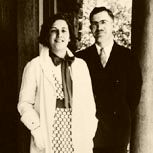
Deceased--Patricia "Patsy" Edson Tombaugh

Patricia "Patsy" Edson Tombaugh
November 7th, 1912 to January 12th, 2012

"Community leader, wife of astronomer, Tombaugh dies at 99"

by

S. Derrickson Moore

January 13th, 2912

Alamogordo Daily News

Patricia "Patsy" Edson Tombaugh, community leader, educator, artist, and enthusiastic supporter of her astronomy pioneer husband Clyde, discover of the planet Pluto, died Thursday at the Arbors of Del Rey in Las Cruces. She was 99.

"Mother was born Nov. 7, 1912, and hoped to enjoy celebrating her 100th birthday with New Mexico's Centennial this year, but her body just gave out," said her daughter Annette Tombaugh Sitze of Las Cruces.

She was in Florida for the 2006 launch of the New Horizons Pluto Probe, which carried Clyde's ashes, and expressed hopes to live to see it reach Pluto in 2015.

She met Clyde Tombaugh shortly after his 1930 discovery of Pluto, when he entered Kansas University as a freshman in 1932, and stayed at her mother's rooming house. They were married in 1934 and had two children, Annette and Alden, both Las Cruces residents.

Known for her sense of humor, she once joked that "Pluto was his first love" and she had to compete with several planets, comets and assorted other heavenly bodies to attract his attention.

But it was clear, through their six-decade marriage that she was the love of his life, and it was her connections that steered the course of his life after his early astronomical coup.

"My uncle, James Edson, my mother's brother, introduced them and it was my uncle, who also brought Werner von Braun here, who was responsible for bringing them to Las Cruces in 1946," Sitze said.

As Chief of Optical Measurements Section at White Sands Proving Ground, Tombaugh was responsible for the tracking telescopes used to photograph rockets and missiles during test flights, and his wife quickly established herself as a community leader here.

She was a founder of the Unitarian Universalist Church of Las Cruces, one of the area's first art associations, and the Community Concerts Association and was active in the University Women's Association, the Women's Improvement Association and the Tombaugh Scholars Program Foundation at NMSU.

She also taught for many years at regional schools, including Old South Ward, Valley View and Connelly elementary schools.

"I think she'll be remembered as a vibrant person very interested in the arts and education. We were very fortunate to have had them as our parents. We could always believe in the truth of what they said. They developed a home that was reliable and cozy," said her son Alden Tombaugh.

She worked closely with Clyde on lecture tours throughout the world until his death in 1997 in their Mesilla Park home. She was a frequent guest at some regional institutions that bear the family name, including Clyde Tombaugh Elementary School, NMSU's Clyde W. Tombaugh Campus Observatory and Tombaugh IMAX Dome Theatre at the New Mexico Museum of Space History in Alamogordo.

She attracted new friends and fans after her 2010 appearance on "The Pluto Files" on PBS's NOVA series, focusing on the conflict over the 2006, still-controversial meeting of the International Astronomical Union, when a vote involving 424 astronomers defined the term "planet" for the first time, a definition which excluded Pluto and added it as a member of the new "dwarf planet" category.

The NOVA crew came to Las Cruces 2009 to film locations that included Alden Tombaugh's home and the Tombaugh Art Gallery, which houses a stained glass window depicting Clyde's life, at the Unitarian Universalist Church, which the Tombaughs helped found in 1954.

"She spoke lucidly and articulately about their life together. This was a treasure of storytelling. That has got to be the friendliest family I have ever spent time with in my life. I learned how friendly people can be, even in times of intellectual conflict," said NOVA host Neil Tyson. Tyson had been one of the ringleaders in the effort to demote Pluto, but changed his mind after meeting Patricia and her family.

In addition to her son and daughter, she leaves five grandchildren, nine great-granchildren and one great-great grandchild.

"New Horizons Team Remembers Patsy Tombaugh"

January 16th, 2012

It was January 2006, just days before the New Horizons spacecraft lifted off from Cape Canaveral Air Force Station, Florida. A reporter asked Patsy Tombaugh, widow of Pluto’s discoverer, Clyde Tombaugh, what her husband might have thought about the first mission to the planet he found in 1930.

“He’d be very happy about it,” she said, “because he’d really want to know what they were finding out about Pluto.”

Today, the team fulfilling that wish mourns Patsy Tombaugh, who died Jan. 12 in Las Cruces, N.M. She was 99.

"I will never forget Patsy's enthusiasm in New Horizons and her pride in what we're doing,” said Alan Stern, New Horizons principal investigator, from the Southwest Research Institute. "I'll also never forget her smile and winning way. On behalf of the entire New Horizons team, I want to express our condolences to Patsy's family and friends, and to say that when we explore Pluto in three years, she will be as much on our minds and in our hearts, as she is today."

Patricia “Patsy” Edson met Clyde Tombaugh in the spring of 1933; her older brother James and Clyde were astronomy majors at the University of Kansas, and good friends. They married in June 1934; daughter Annette was born in 1940 and son Alden in 1945. But, as Patsy wrote in a 2005 New Horizons web story, their “family” seemed much larger.

“Living with Clyde Tombaugh was like having the celestial universe in the next room, but I found it a very good neighbor,” she wrote.

“Of course, I always had to share Clyde not only with Mars, Jupiter, the Moon, and stars, but also with the public. As the Space Age grew so did Clyde's fan mail. From all over this world came letters from all age groups asking for information or autographs. He once said that he had received at least 30,000 letters. He tried to answer each one.”

Clyde died in 1997. In addition to her son and daughter, Patsy is survived by five grandchildren, nine great-grandchildren and one great-great-grandchild. A memorial service is planned for Feb. 12 in Las Cruces.

"My Life with Clyde Tombaugh"

by

Patricia E. Tombaugh

October 31st, 2005

Living with Clyde Tombaugh was like having the celestial universe in the next room, but I found it a very good neighbor. Mars and the Moon were his favorite telescopic studies. At the age of 12 Clyde found astronomy through his love of geography. What would be the geography of other planets?

When Clyde Tombaugh discovered Pluto in February 1930, I was in high school at Westport High in Kansas City, Missouri. I graduated in 1931, and about a year later my widowed mother moved us to Lawrence, Kansas. There, her three children were to work their way through their father's (J.O. Edson's) alma mater, the University of Kansas.

I met Clyde in the spring of 1933. He and my older brother, James B. Edson, were astronomy majors and good friends at KU. James brought Clyde to rent a room at our house for the next school year. Clyde returned to Lowell Observatory for the summer, and we exchanged letters during that time.

In the fall of 1933, Clyde (who had a scholarship) returned to Lawrence to be a student roomer at our house. During that year the Syzygy Club formed. The club's six or seven members met at our house. We talked of rockets and space travel, space platforms and astronauts. We never spoke to the outsiders about this. They thought we were really and completely crazy. I had painted tennis balls to look like Mars and Jupiter. Clyde thought any girl who was that into astronomy was pretty cool. We were married June 7, 1934, with a small event at my mother's home. I had finished my freshman year and Clyde his sophomore year. I was 21, and he was 28.

We spent summers in Flagstaff, Arizona, at Lowell Observatory as we worked our way through college. Clyde was still on the project searching for a 10th planet. We lived in a small, brown, shingled cottage on the observatory grounds among the pine trees 300 feet above the town. We cooked and heated with wood fires and had no refrigerator, telephone, or washing machine. It was a new experience for this city girl, but I loved this beautiful and interesting place, meeting very special people, and getting acquainted with the ways of various Native American tribes there. Flagstaff's population then was about 4,000 people.

Clyde finished his first degree in 1936. We then went to live and work at the observatory full-time. After saving up for two years we returned to KU. Clyde received his master's degree in astronomy, and I finished my degree in philosophy in 1939. We returned to Flagstaff and to parenthood: daughter, Annette, was born in 1940 and son, Alden, in 1945. In 1942, we bought a house in Flagstaff and moved off of Mars Hill into town.

During World War II Clyde had been called to teach navigation to new Navy pilots at the Northern Arizona College. He was also Commander of Civil Defense for Coconino County, Arizona. At the end of WW II many changes occurred rapidly. In 1945, Clyde was a visiting professor at UCLA. In 1946, he left Lowell Observatory. We moved to Las Cruces, New Mexico, where he was Chief of the Optical Measurements section at White Sands Proving Grounds (WSPG). There the American Space Age was in its birth pangs. We watched the delivery with great joy and excitement! The children grew, and I worked on the New Mexico State University campus at the Physical Science Laboratory reading rocket film and plotting flight trajectories.

After nine years with rockets, Clyde wanted to get back into astronomy. He proposed and received a grant to search for small natural satellites of the Earth. He left WSPG (now WSMR, for White Sands Missile Range), moving this project to the Physical Science Laboratory on the NMSU. campus. Clyde later established a Planetary Research Center there, which was supported by grant money. These efforts led to the creation of a Department of Astronomy for a doctoral degree program at NMSU, and also a leading observatory called Apache Point. Apache Point is financed and used by a consortium of universities and the Sloan Digital Project exploring the outer edge of the universe.

Of course, I always had to share Clyde not only with Mars, Jupiter, the Moon, and stars, but also with the public. As the Space Age grew so did Clyde's fan mail. From all over this world came letters from all age groups asking for information or autographs. He once said that he had received at least 30,000 letters. He tried to answer each one.

Clyde had minored in geology to apply that knowledge to the study of Mars and the Moon. He later taught geology at NMSU. He collected rocks everywhere. He carried an Earth globe in his head and loved maps and glass - colored or clear. He had a weather station of his own and made a graph of rainfall in Las Cruces over the years showing drought periods. He was a master at creating telescope mirrors and always had one in process.

Clyde loved animals. He said he spent more time with horses on the farm than with his family. He knew the game of football. He was once asked to call a play at an NMSU game - that call resulted in a field run and a touchdown. They gave him an "honorary coach" plaque.

The press, media, civic clubs, and schools gained from Clyde's willingness to share his passion for the study of the heavens. He was an excellent teacher. A beautiful Las Cruces elementary school carries his name. Being a Depression child on a farm, he kept everything and delighted in making trash into something. He had a cluttered desk in his office - I called it organized chaos. Yet he knew where each thing was hidden among the pile.

Las Cruces loved Clyde. Three of our governors named a state day to honor him. Schoolchildren over the world love Pluto. It is small like they are.

Clyde would have been very excited and interested in the new 10th planet. His life was not wrapped around Pluto. His life was wrapped around the study of the whole universe. Of course, Pluto made him a star to others, and he tried to satisfy the demand. He said his most reverent moments were at the eyepiece of a telescope.

Clyde W. Tombaugh was a caring person. He wanted to give young people credit for their role in any project. Thus, giving them a good start in the field.

Clyde was granted his wish to reach age 90, living to within three weeks of being 91. He was one happy man the day of his 90th birthday party - many family members, friends from the days of White Sands, NMSU, and the Unitarian Church that he helped to establish in Las Cruces were there to help him celebrate. He died on January 17, 1997.

Clyde and I were a great team.

----------

Personal thoughts and reflection by Laurel Kornfeld...

"In Memoriam: Patsy Tombaugh, 1912-2012"

January 20th, 2012

One week before the sixth anniversary of New Horizons’ launch on January 19, Patricia (Patsy) Edson Tombaugh, widow of Pluto’s discoverer Clyde Tombaugh, died in Las Cruces, New Mexico, at age 99.

To many “Pluto huggers”—a term coined by Mike Wrathell to describe supporters of Pluto’s planet status—this loss feels personal. Whether we had had the good fortune of meeting her, or whether she was an icon we admired for her longevity, tenacity, and many accomplishments, to so many of us, it feels like we have lost a family member.

Patsy Tombaugh was so much more than the wife of an astronomer. She was a teacher, a promoter of the arts, an active member of women’s advocacy groups, a co-founder of Las Cruces’ Unitarian Universalist Church, along with her husband, a promoter of education and of the Tombaugh Scholars Foundation at New Mexico State University, and since 2006, a staunch advocate for Pluto’s planet status.

And she had dreamed not only of celebrating her 100th birthday this coming November, but of seeing the 2015 New Horizons flyby of the planet her husband had discovered way back in 1930, before the two were married, when Patsy was still in high school.

She attended the New Horizons launch in 2006, an event that moved her to tears. She also took part in the dedication of her late husband’s telescope at Rancho Hidalgo in 2009. That same year, she was present when the New Mexico House of Representatives passed a resolution declaring March 13 Pluto Planet Day, in defiance of the IAU vote.

When that vote took place, Patsy initially remarked that she had “lost her job” promoting Pluto and keeping it in the public eye, assuring the little world didn’t get forgotten in the wake of so many new discoveries in the outer solar system—not to mention discoveries in other solar systems entirely.

But that reaction didn’t last. She was invited to take part in a 2009 Nova TV version of The Pluto Files organized by Neil de Grasse Tyson, who was so impressed with the kindness and friendship of the Tombaugh family when he visited them in New Mexico, that he actually began rethinking his position on Pluto. Reviewed on this blog three years ago, that Nova episode featured a Tyson who had gone from saying he “killed” Pluto to one who publicly recognized the existence of an ongoing debate, even placing a plaque in the Rose Center noting that Pluto’s status remains in dispute. Towards the end of the episode, Tyson invites Tombaugh daughter Annette to the Rose Center in New York City and proudly displays the plaque to her.

Unfortunately, Patsy was unable to attend the 2008 Great Planet Debate. The family was well represented, however, as Annette, her husband Wilbur Sitze, and their grandson Kyle were all there—and signed the petition I would send to the IAU General Assembly one year later.

Patsy was very much a woman ahead of her time. In an age when few women pursued post-secondary education, she worked her way through college, earning a degree in philosophy from the University of Kansas in 1939.

Along with her brother James Edson, an astronomy major, and Clyde, his friend whom she met in 1933, she actively participated in a group known as the Syzygy Club, a small group of six or seven young visionaries who discussed issues like space travel and rockets. Today, or even back in the 1960s, such groups and discussions are common and mostly well accepted, but in the 1930s, that was not the case. The group never spoke to outsiders about the Syzygy Club for fear of being thought crazy, Patsy noted in a 2005 essay, “My Life with Clyde Tombaugh.”

Her interest in astronomy was exciting to Clyde, as he knew few women who shared that interest. After the Tombaughs were married, she accompanied him to Flagstaff, Arizona, where he worked at the Lowell Observatory. In the early days, that meant “roughing it,” living without phones, refrigerators, or washing machines, and cooking with wood fires. While there, Patsy took the time to meet members of various Native American tribes and learn their ways—a practice that did not become popular in the general culture until the 1960s.

Like Jules Verne back in the 1860s, visionaries are all about imagining the future, thinking beyond the limitations of the present day. Patsy and her husband Clyde were such visionaries, which is why it is not surprising that she set her sights on seeing Pluto up close in 2015.

So many astronomy and space exploration fans, including those who disagree with classing Pluto as a planet, had been rooting for Patsy to live this dream. Still vibrant and active at 99, she became a symbol of longevity and tenacity, a link between the past and the future, an inspiration to others that life could be not just a long journey, but an exciting one, filled with wonder and trust in what could be.

Writer Alan Boyle reports that when he visited Patsy in 2009, she realized the Pluto discussion was not going away any time soon. “It looks like we’re going to have to keep on discussing this,” he quotes her as telling him.

No question about that! And no shortage of people eager to discuss it!

One cannot help but feel sadness at the realization that Patsy will not be with us to realize her dream of seeing the New Horizons Pluto flyby. Yet at the same time, we can also honor a life well lived, a life ten months short of a century.

A friend and commenter on Facebook, on hearing of her passing, said, “I really hoped she’d live to see Pluto…She can see it perfectly now though.”

In their tribute to New Horizons, the band Elias-Fey sings, noting the presence of some of Clyde’s ashes on the spacecraft, “Ole Clyde’s hitching a ride back to where he belongs. Far out of this world, to infinity and beyond. You gotta believe. Because that’s what keeps us moving on. An American dream to where no one’s ever gone.”

I choose to believe that my Facebook friend is right, that Patsy can see Pluto perfectly now. And I know too many people to count will be thinking of her when the flyby happens three years from now.

Farewell, and rest in peace, Mrs. Tombaugh.

----------

And Clyde named an asteroid after her...asteroid 3310 [Patsy] [October 9th, 1931].

Thanks to Laurel K. for the notice.

Thursday, February 5, 2009

Pluto...a reader's contribution

Hades, Persephone, and Cerberus the three headed dog that guarded the entrance to Hell.

Since I have posted material regarding Pluto and its status as a bona fide planet, I have received some comments from Laurel Kornfeld, an aficionado of astronomy and quite passionate about the planet Pluto. At Tyson, Weintraub, Tombaugh & Pluto she stated that there were numerous literary references to Pluto and Ms. Kornfeld supplied some samples. Rather than have them buried as merely a reply, I have chosen to reproduce them below.

From: astropoetry

Banishing Pluto

I can hear them talking outside my door,

stalking in their new, shrunken

solar system’s shadows,

hoping I don’t know they’re there,

daring each other to be

The One who Knocks and

breaks the news to me:

my old planetary identity has

been wiped away, replaced

by something smaller, feebler,

and given grudgingly at that,

sentencing me to exile in

the icy wastes of the Great

Out There.


Surprise, surprise, no-one wants to take

the knife and stab me in my back personally

after their 80 years of flattery

and false colour declarations

of devoted love. Demoted now,

a planet no longer, I’d be lying if I said

I wasn’t bitter; no quitter I,

I always tried to be the world

Clyde wanted me to be.

I thought I was safe! After all,

around me three moons loyally swooned –

Ha, shows how much I knew! Their fine

committee has decreed beloved Charon to be

nothing but a mere near neighbour,

declared that all we had in common

all along was a barren barycentre.


Listen to them arguing!

Flinging blame, claiming they

had never really wanted to wrench

away my hard-won title;

that they’d felt all long I was entitled

to the same respect as Sol’s

other whirling worlds! What weasel words!

I heard them call me cruel names,

blaming the inferior eyes of those

sepia-toned stargazers for giving me more credit

than my size and style deserves.

But most bizarre of all, some seem to

truly believe they’re showing me a kindness,

being merciful, delivering me from

the misery of my celestial self-delusion;

by taking away my name, and claim

to planetary fame they feel they do me good,

pull me back to reality

where Copernicus’ runts know their place

and only real, grown-up planets pace

patiently around the Sun.


So what grim fate awaits me now?

Banishment, from the crumpled maps and charts

that children hunch over in their rooms

as science project deadlines loom;

exile from the Sun’s grand mansion,

thrown onto the KBO-hobo littered street

to seek a new life for myself

on a dusty shelf in the IAU’s

spare room, dumped there like some

tasteless piece of memorabilia

from an older, embarrassing age.


But the rage I feel at being

reduced from true ice world to “dwarf planet”

will never go away! Make up your minds!

Am I a planet or am I not?

If not then do not use that precious

word to describe me for it is cruel!

Under your petty rules

then your so-beloved Neptune

and Jupiter should be exiled too;

tumbling Trojan rocks and rubble

trail and lead Jove as he rolls around

the Sun, and why, when cerulean Neptune’s

orbit intersects with mine am only I

cast out from the light?


As for the precious Homeworld,

Earth’s “area” has not been cleared of clutter

any more than mine! Jagged Atens,

Apollos and Amors jostle as they fire

like tracer rounds ‘cross Terra’s bows,

so how exactly does her rock-saturated,

swooping path around the Sun not sentence her

to exile in the Kingdom of the Dwarves?


Shame on you, shame on you all

for all those years of lies.

True, my size may be suspiciously small,

and my orbit I’ll admit is unconventional,

more drawn-out loop than perfect ratio ring –

and yes I swoop first high above then fall

far below the plane in which my surviving

solar siblings play.

But why exile me for that?


You think that with your clapping hands

and silly, flapping cards you voted me

out of existence; that now I am

“no more”, a mere bad memory banished

to the far shore of this solar system

but you are wrong, and when your tiny,

metal flea buzzes by me in 2015 you’ll see

how cruel you were.

When my craters and canyons fill

its cameras’ field of view,

and images of my frost-bright, ice-white

landscapes fill the pages of the papers

that so gleefully decreed me dead

you’ll lift your heads to the starry sky

and sigh “We were wrong, it was

a planet all along…”

© Stuart Atkinson 2006

From Ms. Kornfeld's website:

As a writer, I cannot help but view this phenomenon from a literary perspective. In "Star Trek," Kirk and Spock make the interesting observation that every myth has some modicum of truth in it. I have always had a personal fascination with mythology, and Pluto, named after the Greek/Roman lord of the underworld, has a wealth of mythological folklore associated with it. The underworld, viewed as the abode of the dead, also represented to ancient peoples the physical underground where seeds lie buried in the winter--and sometimes for many years--only to germinate and be "reborn" when spring comes or when sunlight long blocked by a tree or other object finally reaches that seed. In Babylonian mythology, the spirit of vegetation was represented by the god Tammuz, who descended to the underworld as summer ended, the harvest commenced, and the sun began to wane.

This connection with the seasonal cycle continued in the Greek/Roman myth of Pluto's abduction of Persephone, the maiden of spring. In the wake of Persephone's having been abducted, her mother, the grain goddess Demeter, also known as Ceres, in her grief withheld her bounty and refused to allow anything to grow, thus leading to the desolation of winter. Only when a compromise was reached, and Persephone was permitted to spend a portion of the year above ground with her mother, did Demeter allow vegetation to return and even teach agriculture to human civilization.

Ancient peoples resorted to stories to explain the cycle of the seasons because they knew these phenomena occurred but did not fully understand why. Yet these myths contain within them a greater truth, an understanding of life as a cycle of death and rebirth in which nothing is truly lost, only transformed.

At the Great Planet Debate, one participant asked whether any of us interpreted any symbolism in the banishment of the planet named after the lord of the dead. That's the type of question literary types like me love to ponder. Pluto was named after the god of the underworld by 11-year-old Venetia Burney, a child fascinated by both mythology and astronomy, because it is a dark and cold place. Though it is not scientific, in my literary mind, I think there is significance in our effectively banishing the planet that represents the unknown, the dark, the enigmatic, the mysterious, the intense representation of death and new life, to some sort of astronomical netherworld. Both the mythology and the astronomy of Pluto challenge the limits of what we know and make us think about subjects that make us uncomfortable, subjects we often would rather stay buried.

Symbolically, Pluto's refusal to "die" as a planet fits beautifully with the entire mythology and folklore for which it is named. In this era when education focuses on learning across the disciplines, namely examining the same subject in the areas of science, math, history, literature, art, music, etc., it will make a fascinating research paper topic for students.

Speaking of literature, I would like to share, with proper attribution, a poem I found online linking Pluto the planet with Pluto the god of the underworld and with Tammuz, the Babylonian vegetation deity. It is titled, "The Death of Pluto."

"The Death of Pluto"

Adapted by Robert Croog (by substituting Pluto for Tammuz) from the poem by Saul Tchernichowsky, "The Death of Tammuz," Hebrew, translated by L. V. Snowman, published in A Treasury of Jewish Poetry from Biblical Times to the Present, edited by Nathan and Marynn Ausubel.

"Pluto is dead," Mike Brown of the California Institute of Technology, discoverer of Eris, told reporters in a teleconference, August 25, 2006.

"And behold, there sat the women, weeping." Ezekiel 8:14

"Go, daughters of Zion
And weep you for Pluto,
For Pluto, the beautiful Pluto is dead;
And days dark with cloud and eclipse of the soul,
Autumn days endless the days are ahead.

Let us rise with the sun
In the spring of the morning,
To the forest where lingers the

darkness of night,
To the forest where visions and secrets are hidden,
To the altar of Pluto-- high place of the light.

What dance shall we dance
Around the high altar?
What dance shall we dance for

Pluto this day?
To the left, to the right, and sevenfold seven,
We shall bow to him, calling 'return to our play.'

To the left, to the right,
And seven by seven,
But hand in hand straightly, and

footing it slow;
Pluto wherever he be we shall seek him,
The lads and the maidens apart they will go.

We have sought on the roads
And the highways for Pluto,
Where the crossroads lie bathed in the

light of the sun,
Sweet to the heart in their warmth and their peace,
The sparrows fly there and the larks carillon.

We have sought Pluto
In thickets where leaves fall,
In mazes of holly and forests of pine;
Peradventure he sleeps among incense

of spices,
In the circle of toadstools, the faery shrine.

We have sought Pluto
But vain 'twas to find him,
We clambered the hills and came down

through the dell,
We followed the traces of all mystic wonders--
The abode of the gods and wherever they dwell;

In the grove, in the hedges,
By trees that are altar fuel,
The woodland recesses-- all fodder for

fire,
But only the sparrows cried in their hunger
About the high place-- ruins trodden in mire.

No trace of the fairies
Was found in the meadows,
With the whispering brook their

laughter ceased, too,
Calves graze in the meadows and there the lambs frolic
Round the springs and the wells with fall of the dew.

O, daughters of Zion,
Go mourn in beholding
How the world on its course dull and

troublous is sped,
The distress of a world whose spirit is darkened,
For Pluto, the beautiful Pluto, is dead."

The comment below is by Philip Brown, who quoted the above poem:

"I am inspired by this poem and its themes which are symbolic of Pluto: death, youth, hidden and mysterious places, occult energy and return to the Earth, decay and regeneration in nature, and a playful sense of foreboding. It is apropos of Pluto's recent demotion from planetary status, and the comments of Mike Brown."

The poem above is powerful, but I am as convinced as ever that Pluto is not dead, that this is not the end. It may not be a scientific assertion, but I believe Pluto the planet will follow the archetype of death and rebirth for which it is named, the death of winter giving way to the rebirth of spring.

And Ms. Kornfeld concludes with a teaser of some literary merit that in her willingness may share here at some future date.

On a personal note, while I wish Pluto's demotion had never happened, I am immensely grateful for the many wonderful people I have met in the quest to get this decision reversed; for the knowledge it has brought and love for astronomy it has rekindled in my life; for the numerous experiences I have had that would otherwise never have come my way--everything from the wonderful club known as Amateur Astronomers, Inc., in Cranford, NJ; to new friends around the world; to the opportunity to see Jupiter, Saturn, the Ring Nebula, and so many other celestial objects through a telescope; even to reconnect with various members of my family. Pluto's plight has also inspired the artist in me; the result is I have written a play of more than 100 pages incorporating the mythology and symbolism of Pluto in a fantasy-drama tale of its demotion and reinstatement. Just this Friday, I received the official copyright certification for this play, which I hope to publish and someday bring to production. It is no understatement to say that Pluto has changed my life.

For further reading:

A Double Planet?: Pluto and Charon

by

Isaac Asimov, Frank Reddy , and Greg Walz-Chojnacki

ISBN: 0836812328

Beyond Pluto

by

John Davies

ISBN: 0521800196

Clyde Tombaugh: Discoverer of Planet Pluto

by

David H. Levy

ISBN: 0816513171

How Did We Find Out About Pluto?

by

Isaac Asimov and Erika Kors [illustrator]

ISBN: 0802769926

Ice Worlds on the Ragged Edge of the Solar System

by

Alan Stern and Jacqueline Mitton

ISBN 3-527-40556-9

Out of the Darkness the Planet Pluto

by

Clyde William Tombaugh and P. Moore

ISBN: 0451619978

Pluto

by

Carmen Bredeson

ISBN: 0531117847

Pluto

by

Larry Dane Brimner

ISBN: 0516264990

Pluto

by

Steve Potts

ISBN: 1583401016

Pluto

by

Dana Meachen Rau

ISBN: 0756502977

Pluto

by

Gregory Vogt

ISBN: 1562943936

Pluto and Charon : Ice Worlds on the Ragged Edge of the Solar System

by

Alan Stern and Jacqueline Mitton

ISBN: 0471152978

Pluto and Charon

by

Alan Stern, David J. Tholen and S. Alan Stern [editors]

ISBN: 0816518408

Pluto: The Ninth Planet

by

Michael D. Cole

ISBN: 0766019535

Uranus, Neptune, and Pluto

by

Tim Goss

ISBN: 1588109186


"Naming Pluto"--a film

Persephone [Περσεφονηία]...change of seasons

Pluto="Plutoid"


Pluto not fitting definition

"The Pluto Files" by Neil deGrasse Tyson


Tyson, Weintraub, Tombaugh & Pluto


Tyson's interview with "Time" on Pluto and planets


What's in a name?--Pluto

While I can understand Ms. Kornfeld's passion for Pluto, I have no problem keeping the planet's lore public and allowing the astronomer's to carry on their business of definition and reclassification, if necessary, for their scientific purposes. One does not preclude the other, they are not necessarily mutually exclusive, and neither invalidates opposing positions. Furthermore, I welcome Ms. Kornfeld to contribute relevant materials and perspectives.

Thursday, May 22, 2008

What's in a name?--Pluto

Clyde William Tombaugh
February 4th, 1906 to January 17th, 1997

It has been over 78 years since of the discovery of Pluto [February 18th, 1930] by Clyde William Tombaugh.

Robert Roy Britt [space.com] wrote:


The hunt for Pluto began in 1905 when Percival Lowell...hypothesized about the possibility of a Planet X in the outer solar system. Lowell died before Pluto was discovered. Clyde Tombaugh found it on Feb.18, 1930 in a concerted scan of the sky. Tombaugh compared two photographs taken at the Lowell Observatory and noted the object's movement against the background of stars.

Among the most significant developments related to Pluto was the discovery of the Kuiper Belt, Grundy told SPACE.com. Since the first Kuiper Belt Object was found in 1992, more than 1,000 have been spotted, some roughly half as big as Pluto. Studies of the variety of objects out there "can tell us so much about the compositional, collisional, and dynamical environment Pluto inhabits today and when it was forming."

The original handwritten notes by Clyde William Tombaugh on the aged paper that wraps around the original photographic plates revealing Pluto.

Atlas 5 Rocket
Launch video

And after many delays the probe to Pluto was launched [named "New Horizons"] shortly before noon [CST] on January 19th, 2006. It has now flown past Jupiter and taking a nap for its arrival in 2016. Think a bit...what will you be doing during those years: Graduate, get married, do research--be dead? A lot can happen in ten years. Seriously, consider the course of human events as the probe silently heads for its objective: A changing Earth, wars, natural disasters, advances in medicine and revelations of the universe. Even original members of the Pluto team will change; some might pass. The instruments on board the craft will be outdated and many of the future will laugh at their crudeness..."How primitive they were in the early years of the 21st Century". Consider the hazards of the sojourn and structural fatigue on the craft. Indeed a decade of changes and challenges.

Now the controversy...

Sedna, a new planet or planetoid was discovered 13 billion km from earth. It is very red and may have a moon. Some say if Pluto is a planet then this object should be considered a 10th planet. Despite a somewhat tabloid approach to this discovery, the announcement of Sedna challenges the accepted definition of just what a planet is supposed to be. I had never given it much thought but some research provided interesting information as to a definitive definition and who decides on the definition. Apparently the IAU [International Astronomical Union] is responsible. All of this quest to come up with a definition has caused old debates to resurface [is Pluto a planet or part of the Kuiper Belt], puzzling questions regarding newly discovered bodies since 1995, or the nature of "brown dwarfs". And, it appears that the IAU or anyone else for that matter doesn't have an official definition. Normally and traditionally we assume that planets are the result of swirling masses of dust and gasses that finally cool and condense to form “planets”. It’s one of those situations where we know it when we see it. Nevertheless, the time has come for some group like the IAU to derive a working definition that would reclassify existing phenomena and provide something of an agreement.

In March of 2004 I wrote:

Well, the situation does thicken a bit for it reminds me of an event that happened some 6 years ago regarding the "planet" status of Pluto. Doubts were raised since refined data had drastically changed the initial statistics of Pluto leading to the newest conclusion that Pluto was about 1/6 the size of Earth—thus, was it to be considered a planet. The general public was aghast that Pluto would be dropped from being called a planet. As far as the public was concerned IT was a part of the planetary system—PERIOD. Now, the scientific community had to use its finest diplomacy and make a delicate balance between scientific thought and public relations. Guess who won—the general populace with some grumbling from the scientific community. Many are still scratching their heads pondering a better definition of a “planet”. The discovery of Pluto is somewhat fascinating in that it was the concept of Percival Lowell [remember the canals of Mars] who made the observation that Uranus and Neptune were slightly bumped around and that another celestial body might be doing the wiggling—"Planet-X". Well, Lowell died just before World War I and the work was turned over to Clyde Tombaugh who did find the object. Thus, in 1930, Pluto became a planet. It was later discovered that Pluto was not responsible for the odd movements of Uranus and Neptune and that Pluto was ice covered--more like a comet than a planet. So the debate continues. All of this is to point out that some sort of definition needs to be established. And Pluto will remain a planet despite alternate evidence and much doubt...a part of the romance and cultural heritage of astronomy. I don't believe that Pluto will be dropped from our planet repertoire, but this "tenth planet" discovery will certainly require international debate and a new definition of what will define a planet.

On August 2nd, 2005 Robert Roy Britt [space.com] wrote:

The claim Friday that a 10th planet has been discovered in our solar system has set off a fresh round of debate and international talks aimed at defining the most vexing term in astronomy: the word planet.

A formal proposal could come within a week or two. But some astronomers see no easy resolution.

Now, the guy who stirred the latest dust is trying to snuff the whole debate by repositioning planet as a cultural term that no longer has any scientific meaning.

"Scientists have for the most part not yet realized that the term planet no longer belongs to them," says Caltech's Mike Brown, who led the discovery of the new larger-than-Pluto object.

Brown's new view comes after contemplating six years of mostly fruitless scientific arguments that began when the public became outraged over a rumor that scientists planned to demote Pluto, a rumor rooted in the fact that some astronomers had already stopped calling Pluto a planet by the late 1990s.

"I finally realized the mistake we astronomers had been making all along," Brown told SPACE.com yesterday. "The word planet is simply not a scientific word, it is a cultural word. Once you get over that trap the rest becomes easy."

The problem

At the heart of the problem is small world that should never have been called the ninth planet when it was found 75 years ago.

Pluto is small, its orbit very noncircular, and it travels 17 degrees outside the main plane of the solar system where the other planets roam. In recent years, several other round worlds at least half as big as Pluto have been found on similar offbeat paths, including two announced last week in addition to 2003 UB313, whose orbit is inclined a whopping 45 degrees.

Most astronomers view all of them, Pluto included, as members of the Kuiper Belt (other terms are used, too, to describe the increasingly complex outer solar system).

The newfound object, temporarily named 2003 UB313, is perhaps 1.5 times the diameter of Pluto and appears to have a similar surface rich in frozen methane. So Brown called it the 10th planet in a hastily arranged teleconference with reporters Friday evening.

NASA, which funded the research, appeared to endorse the label by using Brown's terminology in its official press release.

But yesterday, NASA's Paul Hertz said, "It's not NASA's job to decide what is and what is not a planet." Hertz, chief scientist in the agency's Science Mission Directorate, acknowledged the task falls to the International Astronomical Union (IAU).

"We anticipated there would be a difference of opinions," Hertz said in a telephone interview.

Wildly different, it turns out.

If 2003 UB313 is a planet, one argument goes, then so are those other round things out there. So the new kid on the block would have to go to the back of the line, numerically. It might be No. 12 or No. 24, depending on whose scheme you like.

Proposal soon?

Efforts to craft an official definition have dragged on for years.

The IAU, responsible for nomenclature of all things beyond Earth, has been mulling a planet definition since at least 1999. An IAU Working Group specifically set up to develop a recommendation has been stalled for the past six months.

But most of the dozen members in the group were "exchanging a lot of email this weekend," said Alan Stern of the Southwest Research Institute, who is on the committee.

The members have said they "want to get something done, pronto," Stern told SPACE.com. He said it's possible a proposal could be finalized in a week or two and made public. Still, group members have clearly different ideas in mind.

A synopsis of Stern's thinking:

A planet is a body that directly orbits a star, is large enough to be round because of self gravity, and is not so large that it triggers nuclear fusion in its interior.

"I think there's a consensus moving in this direction," Stern said.

The actual definition will, at least, be more complex than that. Stern favors calling the smaller objects dwarf planets, for example. Other astronomers prefer the term minor planet. Another term bandied about is Kuiper Belt planets. Some don't like the idea of applying the planet label at all.

Let there be 8

Brian Marsden, who is also on the IAU Working Group and who runs the Minor Planet Center where data on objects like these end up, says a simple definition like Stern's makes sense from a theoretical point of view.

If adopted, the wording would bring our solar system's tally of known planets to about two dozen, Marsden said.
A Revolution

A swarm of small worlds discovered in recent years is remaking our view of the solar system, astronomers agree. Pluto, once an oddball, is now thought to be one of many round objects out there.

"It's really a revolution," says Alan Stern of the Southwest Research Institute. "We are finding out just how quaint our view of the solar system was."

Improved technology promises more discoveries. Some astronomers won't be surprised if something as big as Mars, or even Earth, is found way out there but still bound to the Sun. So far, only a fraction of objects thought to be in the Kuiper Belt, beyond Neptune, have been found.

Stern, who is managing NASA's New Horizon's mission to Pluto, points out that there is a billion times more space in our solar system beyond the Kuiper Belt compared to inside that region.

"Hold onto your hat," he said. "It's just going to get more bizarre."

But practically speaking, Marsden, who expects it will take "somewhat more than a week or two to come up with a policy," prefers another approach.

"The only sensible solution is to accept that the solar system contains the eight planets known a century or so ago," Marsden said via email, "and to add new members only if they are larger than, say, Mars -- or maybe even the Earth."

(Stern and others contend that such large worlds indeed await discovery.)

The discovery of 2003 UB313 presents "the best chance to resolve the problem," Marsden said. "I doubt that all astronomers will be happy with the outcome, but I would hope that what is decided is enough of a compromise that most of them are."

Forget science

Mike Brown yesterday attempted to shift the whole debate away from science.

In Brown's mind -- and he admits to changing it recently -- Pluto is too enshrined in our culture, from place mats to postage stamps, to strip it of planethood.

"Some astronomers have rather desperately attempted to concoct solutions which keep Pluto a planet, but none of these are at all satisfactory, as they also require calling dozens of other objects planets," Brown wrote on his web site this week. "While people are perhaps prepared to go from nine to 10 planets when something previously unknown is discovered, it seems unlikely that many people would be happy if astronomers suddenly said, 'we just decided, in fact, that there are 23 planets, and we decided to let you know right now.'"

Brown's team is taking a stand.

"We declare that the new object, with a size larger than Pluto, is indeed a planet," Brown wrote. "A cultural planet, a historical planet. I will not argue that it is a scientific planet, because there is no good scientific definition which fits our solar system and our culture, and I have decided to let culture win this one."

He advises the public to "ignore the distracting debates" of the scientists.

It seems clear the IAU Working Group plans to ignore Brown, at least insofar as they expect to forge a scientific definition.

Yet no matter what the group comes up with, you can bank on at least one more year of debate. For a definition to be made official, it must be voted on at an IAU General Assembly meeting. The next one is in Prague in August, 2006.


I say...leave the name and retain Pluto as part of popular lore of the solar system...the scientists can provide the proper nomenclature for their purposes.


A Double Planet?: Pluto and Charon

by

Isaac Asimov, Frank Reddy , and Greg Walz-Chojnacki

ISBN: 0836812328

Beyond Pluto

by

John Davies

ISBN: 0521800196

Clyde Tombaugh: Discoverer of Planet Pluto

by

David H. Levy

ISBN: 0816513171

How Did We Find Out About Pluto?

by

Isaac Asimov and Erika Kors [illustrator]

ISBN: 0802769926

Ice Worlds on the Ragged Edge of the Solar System

by

Alan Stern and Jacqueline Mitton

ISBN 3-527-40556-9

Out of the Darkness the Planet Pluto

by

Clyde William Tombaugh and P. Moore

ISBN: 0451619978

Pluto

by

Carmen Bredeson

ISBN: 0531117847

Pluto

by

Larry Dane Brimner

ISBN: 0516264990

Pluto

by

Steve Potts

ISBN: 1583401016

Pluto

by

Dana Meachen Rau

ISBN: 0756502977

Pluto

by

Gregory Vogt

ISBN: 1562943936

Pluto and Charon : Ice Worlds on the Ragged Edge of the Solar System

by

Alan Stern and Jacqueline Mitton

ISBN: 0471152978

Pluto and Charon

by

Alan Stern, David J. Tholen and S. Alan Stern [editors]

ISBN: 0816518408

Pluto: The Ninth Planet

by

Michael D. Cole

ISBN: 0766019535

Uranus, Neptune, and Pluto

by

Tim Goss

ISBN: 1588109186


New Horizons

Onboard name identified by #397611