











!["Coupling" 1976 [Gum-bichromate]](http://2.bp.blogspot.com/_IoU3bEFUwWc/S69lnr9G6AI/AAAAAAAAH58/O40Gg-G6rKk/S150/COUPLING+3.jpg)



Chris Marker
[Christian François Bouche-Villeneuve]
July 29th, 1921 to July 29th, 2012
July 29th, 1921 to July 29th, 2012
"French film-maker Chris Marker dies"
The controversial Left Bank Cinema director scored an arthouse hit with Sans Soleil and made the brilliant, haunting, highly influential La Jetée
July 30th, 2012
guardian.co.uk
Chris Marker, the enigmatic master of left-field French cinema, has died at the age of 91. The artist and film-maker was best known for his award-winning documentary Sans Soleil and for his haunting drama La Jetée, charting the quest for memory in the aftermath of a nuclear apocalypse.
Born Christian François Bouche-Villeneuve, Marker fought for the French Resistance and then cut his teeth as a journalist and a critic for Cahiers du Cinéma. He made his film debut with Olympia 52, a documentary on the 1952 Helsinki Olympics, and went on to become a leading light of the Left Bank Cinema movement alongside his friends Agnès Varda and Alain Resnais. In 1961 he sparked controversy with the documentary Si Cuba, a film that praised Fidel Castro, denounced America and was promptly banned in the US.
Marker's other notable pictures include 1985's AK, an essay on the work of the Japanese director Akira Kurosawa, and 1977's A Grin Without a Cat, charting the socialist struggle in the period before and after the 1968 Paris uprisings. He scored an arthouse hit with 1983's Sans Soleil, his elliptical meditation on travel and memory that darted from Japan to Africa via an appreciation of the 1958 thriller Vertigo. Hitchcock's movie, said the director, was the only film "capable of portraying impossible memory, insane memory".
Yet Marker's most influential production remains 1962's La Jetée, a 29-minute drama composed almost entirely of still images and tracing one man's attempt to reclaim an image from his past. Marker's poetic, provocative meld of global catastrophe and human frailty went on to inspire the 1987 drama The Red Spectacles and Terry Gilliam's 1995 blockbuster 12 Monkeys.
The teasing, elliptical nature of Marker's work was reflected in the man himself. He refused to give interviews, hated being photographed and claimed to have born in Mongolia despite contradictory sources that suggested he was a native of Paris. All of which, wrote the critic David Thomson, fostered the notion of Marker as "some mysterious if ideal figure, a hope or a dream more than an actual person". He was, Thomson added, "the essential ghost".
"Chris Marker dies at 91; avant-garde French filmmaker"
Marker directed 'La Jetee,' a short film that travels between past and future. Pauline Kael called it ' very possibly the greatest science-fiction movie yet made.'
by
Elaine Woo
July 31st, 2012
Los Angeles Times
Chris Marker, an enigmatic figure in French cinema who avoided publicity and was loath to screen his films yet was often ranked with countrymen Alain Resnais and Jean-Luc Godardas an avant-garde master, died at his home in Paris on Sunday, his 91st birthday.
His death was reported by Agence France-Presse, but the cause was not given.
Marker, who worked well into his 80s, made more than two dozen films during a six-decade career. Known as a pioneer of the film essay, he was most admired for "La Jetee" (1962) and "Sans Soleil" (1983), which explored time, memory and history in an unconventional and evocative style.
"La Jetee" ("The Jetty") was a 28-minute movie made almost entirely of stills that focuses on a man who travels between the past and the future to understand a haunting image from his childhood.
The most startling moment in the film is when, for a brief few seconds, the stills give way to moving images of a sleeping woman opening her eyes, staring at the camera and blinking. For British film scholar Janet Harbord, who wrote the 2009 book "Chris Marker: La Jetee," the motion causes "a gasp close to an experience of the erotic or the religious or possibly both," and conveys in an instant the magic and mystery of the medium.
Critic Pauline Kael called "La Jetee" "very possibly the greatest science-fiction movie yet made." Film critic and historian David Thomson went further, declaring in a 2002 article in the British newspaper the Guardian that "La Jetee" could be "the one essential movie ever made."
Its theme may sound familiar to contemporary audiences because it inspired a Hollywood remake, "12 Monkeys." Directed by Terry Gilliam and starring Bruce Willis and Brad Pitt, the 1995 film was generally viewed by critics as less essential than the original.
Marker's other masterpiece, "Sans Soleil" ("Sunless"), is narrated by a woman who reads aloud the letters she receives from a nomadic cameraman during his travels in Japan, Iceland, Africa and other far-flung destinations. The letters describe wondrous sights, such as a blindingly white desert, a musical staircase and a temple dedicated to cats.
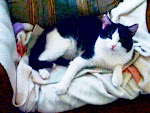
Cats appear throughout Marker's films and are named in two of them: the documentaries "A Grin Without a Cat" (1977) and "The Case of the Grinning Cat" (2004). The first film examines the New Left movement from the Vietnam War era to the ouster of Chilean President Salvador Allende in 1973. The latter film documents the political mood in France after the Sept. 11 attacks and incorporates images of smiling cat graffiti that began to appear in Paris then. Rare photographs of the filmmaker usually show a thin, balding man behind a camera with his cat, Guillaume.
Marker's politics were clear in other works, as well, such as "Cuba Sí" (1961), about Castro's Cuba; "Le Joli Mai" (1963), made from 55 hours of interviews with French citizens about their attitudes toward the French-Algerian War; and "The Last Bolshevik" (1993), conceived as a series of letters to Soviet filmmaker Alexander Medvedkin.
He also produced "Far from Vietnam," a 1967 documentary made in collaboration with Godard and Resnais that opposed American involvement in Vietnam.
One of Marker's later works, from the late 1990s, was an interactive CD-ROM called "Immemory" that consists of more than 20 hours of stills, film clips, music, text and sound bites divided into several sections, including poetry, cinema, travel and photography.
Little is known about Marker's life, which apparently was just as the filmmaker, who called himself "the best-known author of unknown movies," wanted it.
Most biographies say he was born Christian François Bouche-Villeneuve in Neuilly sur Seine, France, on July 29, 1921, and studied philosophy with Jean-Paul Sartre in the late 1930s. It may be apocryphal, but some sources say his affection for the Magic Marker felt-tipped pen inspired him to change his last name.
Doubts also surrounded his birthplace. Marker told film historian Thomson during a meeting in Berkeley in the 1980s that Thomson's "Biographical Dictionary of Film" was in error and that he actually was born in Ulan Bator, Mongolia.
Thomson said he accepted the eccentric filmmaker's Mongolia story, explaining in the Guardian that it was "a part of Chris Marker's thinking that no place is actually farther away, more extreme or less plausible than another."
In Marker's view, history was fluid and a playful view was sometimes important. "Look what happened to dinosaurs," his narrator says in "The Last Bolshevik" as a child on screen hugs a stuffed version of the TV character Barney. "Kids love them."
"Chris Marker, Pioneer of the Essay Film, Dies at 91"
by
Dennis Lim
July 31st, 2012
The New York Times
Chris Marker, the enigmatic writer, photographer, filmmaker and multimedia artist who pioneered the flexible hybrid form known as the essay film, died on Sunday in Paris. He was 91.
His death was announced by the French Culture Ministry.
A transmedia artist long before the term was coined, Mr. Marker resisted categorization throughout his career; he once referred to “career” as “that despicable word.” His sprawling and constantly evolving body of work, which ranged from books to installations to CD-ROMs and included more than 50 films of varying length, was at once fragmentary and cohesive, united by an abiding interest in the nature of time and memory and by a strong physical and intellectual wanderlust.
Mr. Marker’s best-known film, the 1962 short “La Jetée,” about a man haunted by a childhood memory, was the basis of the 1995 Hollywood movie “12 Monkeys” starring Bruce Willis and Brad Pitt. Whether taking the form of time-warp science fiction like “La Jetée” or archive-rich historical surveys like “A Grin Without a Cat” (1977), about the fate of the New Left after the pivotal year 1968, most of his films involve a kind of time travel.
A lifelong leftist and perennial globe-trotter, he documented almost every political hot spot of the mid- and late-20th century: the Soviet Union, China, the new state of Israel, Cuba after the revolution.
In his later works — like the installation “Silent Movie” (1995) and the feature “Level Five” (1997) — he was also an early explorer of video, digital technology and cyberspace.
Born Christian François Bouche-Villeneuve on July 29, 1921, Mr. Marker hid many aspects of his biography. He once claimed he was born in Ulan Bator, Mongolia, though some sources have cited his place of birth as the Parisian suburb Neuilly-sur-Seine. He granted few interviews and typically refused to be photographed. Information about his survivors was not immediately available. But in his work, at least, Mr. Marker was not anonymous so much as he was playfully evasive.
His films often feature a first-person narrator, a device he once called “a sign of humility.” They abound with avatars and alter-egos, including his own cat, Guillaume-en-Egypt, which sometimes appeared, in the flesh and in cartoon form, as his surrogate.
The pseudonym Chris Marker — which originally appeared in print as “Chris. Marker” — dates from the late 1940s, when he published criticism, editorials, poetry and fiction, including a novel, “Le Coeur Net,” set in Indochina.
After his first directorial effort, “Olympia 52,” about the 1952 Helsinki Olympic Games, Mr. Marker wrote the narration for the documentary “Statues Also Die” (1953), which he directed with Alain Resnais. Ostensibly about African art, the film doubled as a critique of French colonialism. It received the prestigious Prix Jean Vigo but was banned by French censors for more than 10 years because of its political content.
Mr. Marker refined his signature approach to voice-over narration, at once intimate and quizzical, in the early works “Sunday in Peking” (1956) and “Letter From Siberia” (1957). The latter film’s provocative rethinking of the relationship between word and image — one sequence replays the same shots with vastly different commentaries — prompted the critic André Bazin to use the term “an essay documented by film.”
Borrowed from the poet Henri Michaux, the opening words of “Letter From Siberia” — “I write to you from a far-off country” — could serve as Mr. Marker’s motto. He had a foreign correspondent’s drive to “capture life in the process of becoming history,” as he put it, but there was also a science-fiction strangeness to many of his travelogues.
He retained his outsider’s perspective, his taste for oddity and digression, even when shooting at home. The ambitious “Le Joli Mai” (1963) was an attempt to map the national psyche as the Algerian War drew to a close, culled from dozens of man-on-the-street interviews in Paris. The film is often called an early example of the documentary mode known as cinéma vérité. But Mr. Marker rejected the term and proposed a more modest alternative: “ciné, ma vérité” (“Cinema, my truth”).
On days off from “Le Joli Mai,” Mr. Marker embarked on a photography project that became the half-hour “La Jetée.” Composed almost entirely of still images, this recursive loop of a film was both an homage to a beloved movie, Alfred Hitchcock’s “Vertigo,” and a self-reflexive testament to cinema as a time machine.
Like many of his peers, Mr. Marker became increasingly politicized in the 1960s. In 1967, he formed a film collective called SLON (Russian for “elephant” and also an acronym for Société pour le Lancement des Oeuvres Nouvelle, or Society for the Launch of New Works).
SLON’s documentaries include “À Bientôt, J’espère,” about a strike at a French textile factory, and “The Sixth Side of the Pentagon,” about an antiwar march on the Pentagon. One of the collective’s major initiatives was the omnibus film “Far From Vietnam,” a protest against American involvement in Vietnam, with contributions from Mr. Marker, Mr. Resnais, Jean-Luc Godard and Agnès Varda, among other filmmakers.
“Sans Soleil” (1982), often acknowledged as the masterpiece among Mr. Marker’s late works, is one of his least classifiable, a free-associative mix of ethnography, philosophy and poetry. Purporting to be the footage of a fictional cinematographer accompanied by his letters to a nameless woman, the film roams from Iceland to Guinea-Bissau to Japan, a favorite destination of Mr. Marker’s since “The Koumiko Mystery,” which he shot in Tokyo during the 1964 Olympics. A bar in Tokyo’s famous Golden Gai district is named for “La Jetée” — an honor that Mr. Marker once said was “worth more to me than any number of Oscars.”
Mr. Marker also turned his attention to fellow filmmakers. He made two essays on Soviet cinema and history centered on the neglected director Alexander Medvedkin (“The Train Rolls On,” “The Last Bolshevik”), one elegy to his friend Andrei Tarkovsky (“One Day in the Life of Andrei Arsenevich”) and a portrait of Akira Kurosawa on the set of the 1985 film “Ran” (“A.K.”).
He remained active into his 70s and 80s. His last film appears to have been a short about the history of cinema, commissioned as a trailer for the 50th anniversary of the Viennale Film Festival in October. The film is scheduled to be shown at the Locarno Film Festival on Saturday.
Mr. Marker gave one of his final interviews — in 2008 to the French magazine Les Inrockuptibles — through the virtual medium of Second Life. In response to a question about pseudonyms as masks, he said: “I’m much more pragmatic than that. I chose a pseudonym, Chris Marker, pronounceable in most languages, because I was very intent on traveling. No need to delve further.”
"In Memoriam: Chris Marker"
by
Richard Brody
July 30th, 2012
The New Yorker
The very subject of Chris Marker’s work is memory; his death today, at the age of ninety-one (indeed, the day after his ninety-first birthday), elicits a simulacrum of memory, in tributes such as this one, where the contrast between the immediate significance (to the protagonist in the drama and to those who know and love him) and its public reflection is stretched to absurdity. For Marker, memory isn’t passive; it’s an act of resistance—the edge that cuts a path into the future—and the effective work of memory is the very definition of art. Marker was a master of film editing—the part of the filmmaking process that Jean-Luc Godard, another master editor and memory-artist, defined as holding past, present, and future in one’s own hands—and the very possibility of remembering Marker demands a little editing, a splicing-in of excerpts from a surprising and crucial document.
Marker gave few interviews and hardly ever allowed himself to be photographed; in one of the few interviews that he did grant—in 2003, to Samuel Douhaire and Annick Rivoire, for Libération—he explained his reticence, calling himself “publiphobic”:
At the beginning of the sixties, that was well-thought-of, now it has become literally inadmissible. I can’t help it. That way of putting the mechanism of calumny in the service of praise has always rubbed me the wrong way, although I recognize that this diabolical sponsorship sometimes offers the most beautiful images one can see on a small screen (have you seen David Lynch with blue lips?).
In this remarkable text, he provides several signal examples of what he considered abuses of the press: the silence surrounding the 2002 reissue of a 1945 book by the novelist François Vernet, a friend of his who died at Dachau; the lack of discussion of a recording of songs by Viktor Ullmann of poems by Hülderlin and Rilke (“one is seized by the truly vertiginous idea that, at that moment, nobody glorified true German culture more than this Jewish musician who would soon die at Auschwitz”). Marker defined the problem:
The exponential progress of stupidity and vulgarity, everyone’s aware of it, but it’s not just a matter of a vague feeling of disgust, it’s a concrete fact, it’s measurable (it can be measured by the volume of the “Woof!”s that greet talk-show hosts, which has risen by an alarming number of decibels in the last five years) and which constitutes a crime against humanity. Not to mention the permanent assault on the French language.
It’s strange to hear (virtually) Marker speak for himself; in the interview, he describes his own ambition—in particular, regarding his longtime championing of lightweight and low-cost equipment: “Trying to give the floor to people who haven’t got it, and, when possible, to help them to find their means of expression. They’re workers at the Rhodia factory in 1967, but also the Kosovars I filmed in the year 2000, who had never been heard on television: everyone was speaking for them….” He spoke of teaching the editing of “Battleship Potemkin” to filmmakers from Guinea-Bissau and of the use of television equipment by Bosnian refugees, in 1993. But he distances himself from the label of “political” filmmaker: “What I’m passionate about is History, and politics interest me only insofar as it is the cross-section of History in the present.”
In his 1978 film “A Grin Without a Cat“—his vast and rueful look at what the events of 1968 actually were, and why they proved to be of so little consequence—Marker gathers an extraordinary set of documentary film clips and, assembling them along with his trenchant, provocative text on the soundtrack, brings them back from the dead. He infuses them—and, through them, history itself—with a shocking new energy. It’s as if his memory-piece—a memorial for dreams that died—actually reanimated the dreams and, by locating their traces in largely forgotten actions, offered a surprisingly practical map for making a glimmer of a stifled utopia burst forth with a new brilliance.
And as for the voice: as much as Marker masks his own—whether, literally, in Agnès Varda’s “The Beaches of Agnè” or virtually in his own distinctive reticence as a movie essayist who doesn’t speak of himself—he has made one of the greatest films about the use of the voice, “The Loneliness of the Long-Distance Singer” (scroll down) in which he follows Yves Montand in the rehearsals leading up to a return to the stage after a six-year hiatus. Montand’s natural talent, his relentless practice and rigid self-discipline, his tightly-focussed and highly-principled purpose, and his charismatic presence all contribute to an art that is centered on the body, its presentation, its projection. Marker’s modesty is that of a devoted craftsman and an exquisite aesthete: a nonperformer, a nonsinger, a nonathlete, a former writer who didn’t continue—he did the one thing that he cultivated with an unyielding devotion. In so doing, he left on the history of cinema, and on history as such, a mark more enduring and decisive than that of mere personality. He made his own conscience, of the cinema as the living embodiment of history, into the conscience of his time—and, now that he’s not here, of future times already.

La Jetée
1962
1962

Sans Soleil1982


